5 Ways AI is Transforming the Event Planning Industry
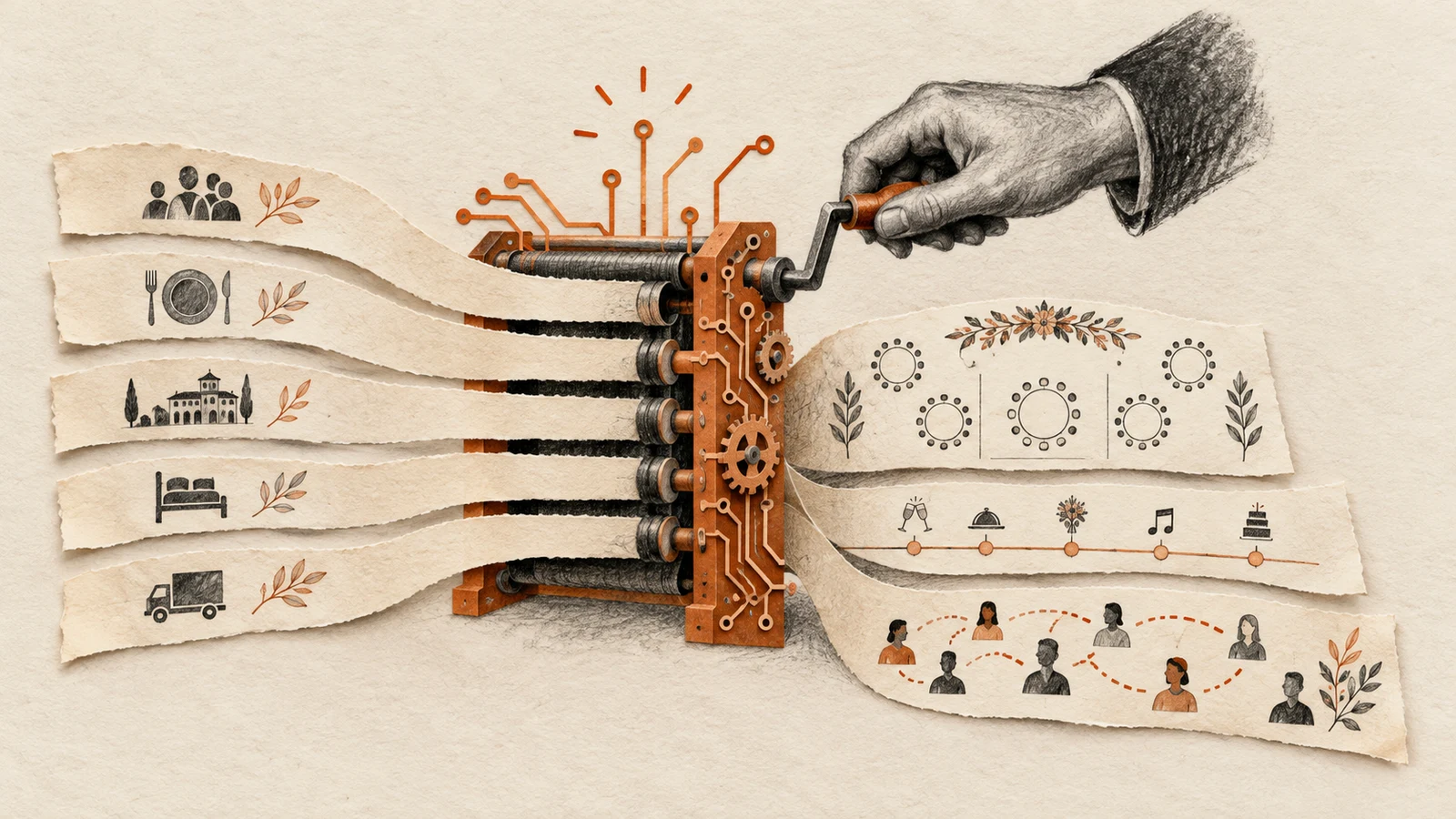
The event planning industry is evolving rapidly, and one of the most significant drivers of change is artificial intelligence (AI). From automating tasks to enhancing attendee experiences, AI brings innovation that streamlines planning and amplifies engagement. Here are five impactful ways AI is transforming event planning:
1. Automating Repetitive Tasks in Event Management
One of AI’s primary benefits is its ability to automate repetitive tasks. Planners can use AI to handle tasks like scheduling, managing attendee lists, sending reminders, and even processing payments.
This automation reduces time spent on admin work, allowing planners to focus on strategy and creativity.
2. Personalised Attendee Experiences Powered by AI
AI enables personalized experiences by analyzing attendee preferences. For example, chatbots powered by AI can answer attendee questions instantly and recommend sessions or booths based on their interests.
This tailored experience increases satisfaction and encourages future event participation.
3. Enhancing Event Marketing with Predictive Analytics
AI tools can help target audiences more effectively. Predictive analytics analyze past data to determine the best times and channels to promote events.
Additionally, AI-driven content creation can automatically generate social media posts or emails that resonate with specific audience segments.
4. Improving Onsite Interactions with AI Chatbots
During events, AI-powered chatbots provide real-time assistance to attendees, answering questions about schedules, venues, or amenities. This reduces the need for onsite staff and allows for a seamless attendee experience, with information accessible in seconds.
5. Gathering Actionable Insights Through Data Analysis
AI can analyze feedback, track attendee behavior, and assess session popularity to provide event organizers with actionable insights.
These insights help planners understand what works and what doesn’t, allowing them to make data-driven decisions for future events. This is particularly valuable for recurring events like corporate team building programmes, where year-on-year improvement matters.
Incorporating AI into event planning is becoming essential. It not only improves efficiency but also enhances the overall event experience for attendees. As AI continues to develop, the industry will undoubtedly see even more advancements in event planning and execution.
Looking for professional event management in Singapore? Get Out! Events can help you plan your next corporate event.
Turning general event advice into an actual corporate plan
Most event advice sounds useful until the organising team has to turn it into a budget, approval paper and event-day run sheet. A practical corporate event plan should answer five questions clearly: what the event is meant to achieve, who the audience is, how the programme will flow, what constraints the venue creates and what decisions must be made before suppliers can quote accurately.
In Singapore, those constraints are often concrete. Ballroom access may be limited. Outdoor plans need weather alternatives. Government and enterprise buyers may need procurement documentation. Family days need crowd comfort and age range planning. Team building needs facilitation that fits the group size and culture. Dinner and dance events need entertainment that works around food service, speeches and prize segments.
What Get Out! Events would clarify first
Before recommending a format, Get Out! Events would usually clarify pax, event date, venue status, programme duration, budget range, audience profile, stakeholder expectations and any fixed items such as speeches, award segments, catering or sponsor requirements. With that information, the proposal can move from generic event inspiration to a working plan with scope, timeline, manpower and contingency assumptions.
Practical checklist before you act on this event guide
Use this page as a planning filter, not just as background reading. Before asking any vendor for a quote, write down the event objective, expected headcount, preferred date, venue status, budget range, decision deadline and the people who must approve the final recommendation. These details change the format, manpower, timeline and risk profile of the proposal.
For Singapore corporate events, the most common mistake is comparing ideas before the constraints are clear. A team activity for 40 people in an office has a very different operating plan from a 300-person event in a hotel ballroom. A virtual event with one speaker does not need the same production layer as a hybrid town hall with remote presenters. A corporate dinner needs entertainment that respects food service and speeches. A family day needs comfort, shade, access and age-range planning.
Questions to ask before shortlisting a vendor
- Audience fit: Does the recommendation suit the seniority, department mix, language comfort, mobility and energy level of the group?
- Venue fit: Has the organiser checked space, access time, AV, power, rain cover, registration flow, food timing and crowd movement?
- Manpower: Who is on-site, who leads the briefing, who manages suppliers, who handles changes and who owns the final run sheet?
- Budget clarity: Does the quote separate mandatory scope from optional upgrades, and does it state what is excluded?
- Fallbacks: What changes if attendance increases, the weather turns, a speaker is late, a venue rule changes or the programme overruns?
How Get Out! Events would turn this into a proposal
Get Out! Events would start by clarifying the brief and then matching the format to the real operating conditions. That means looking at the goal of the event, the people attending, the available time, the venue, the likely approval path and the level of support required on the day. The output should not be a generic package pasted into a PDF. It should be a practical recommendation with a clear event flow, assumptions, inclusions, manpower notes and next decisions.
If you already have a venue, date or rough budget, share those details early. If you do not, share the objective and expected headcount first. The team can then recommend whether the next step should be a shortlist of formats, a venue-fit check, a budget range, a sample run sheet or a full proposal. This keeps the planning conversation useful and prevents the common problem of comparing ideas that were never scoped against the same brief.
When to move from research to enquiry
Move from reading to enquiry once you know the event type, rough group size and desired month. Even if the brief is incomplete, an early conversation can prevent wasted time by ruling out formats that do not fit the venue, budget or audience. For urgent events, the first call should focus on feasibility: what can be delivered well with the time available, what should be simplified and which decisions must be made immediately.
Service planning FAQ
How early should we involve an event organiser?
Involve the organiser once the rough event type, headcount and month are known. Early input helps check whether the budget, venue and programme idea are aligned before internal expectations harden around an unrealistic format.
What information gives the fastest useful recommendation?
The fastest useful brief includes pax, event date or month, venue status, budget range, audience profile, event objective, must-have programme items and any procurement or approval deadline. If these are not fixed yet, share the uncertainties clearly so the proposal can show assumptions instead of pretending everything is confirmed.
What should a good proposal make clear?
A good proposal should explain scope, manpower, event flow, supplier responsibilities, setup requirements, exclusions, optional upgrades and fallback plans. This lets the organising team compare risk and operational fit, not only creative ideas or headline pricing.