Relevant portfolio
Look for events similar in format, attendance, complexity and audience. Ask what the company was responsible for, not only what appears in photographs.

2026 decision-making guide · Singapore
A practical framework for comparing portfolios, proposals, teams, operating plans and commercial terms before you appoint an event partner.
Start with fit, not a flashy pitch
An event company may coordinate concept development, venue and supplier logistics, programme design, entertainment, production and on-site execution. The exact scope differs from one brief to another. Before comparing companies, define the outcome you need, the people attending, the format, the likely venue, the working budget and the decisions your internal team must retain.
Specialisation matters. A partner experienced in dinner and dance events may be well suited to stage, entertainment and guest-flow planning. A team building programme requires facilitation and activity design, while a family day adds age range, crowd movement and family-friendly programming. Relevance is more useful than the size of a portfolio alone.
Evaluation framework
Use the same questions and scoring method for every shortlisted company. That makes trade-offs visible and keeps the decision anchored to your brief.
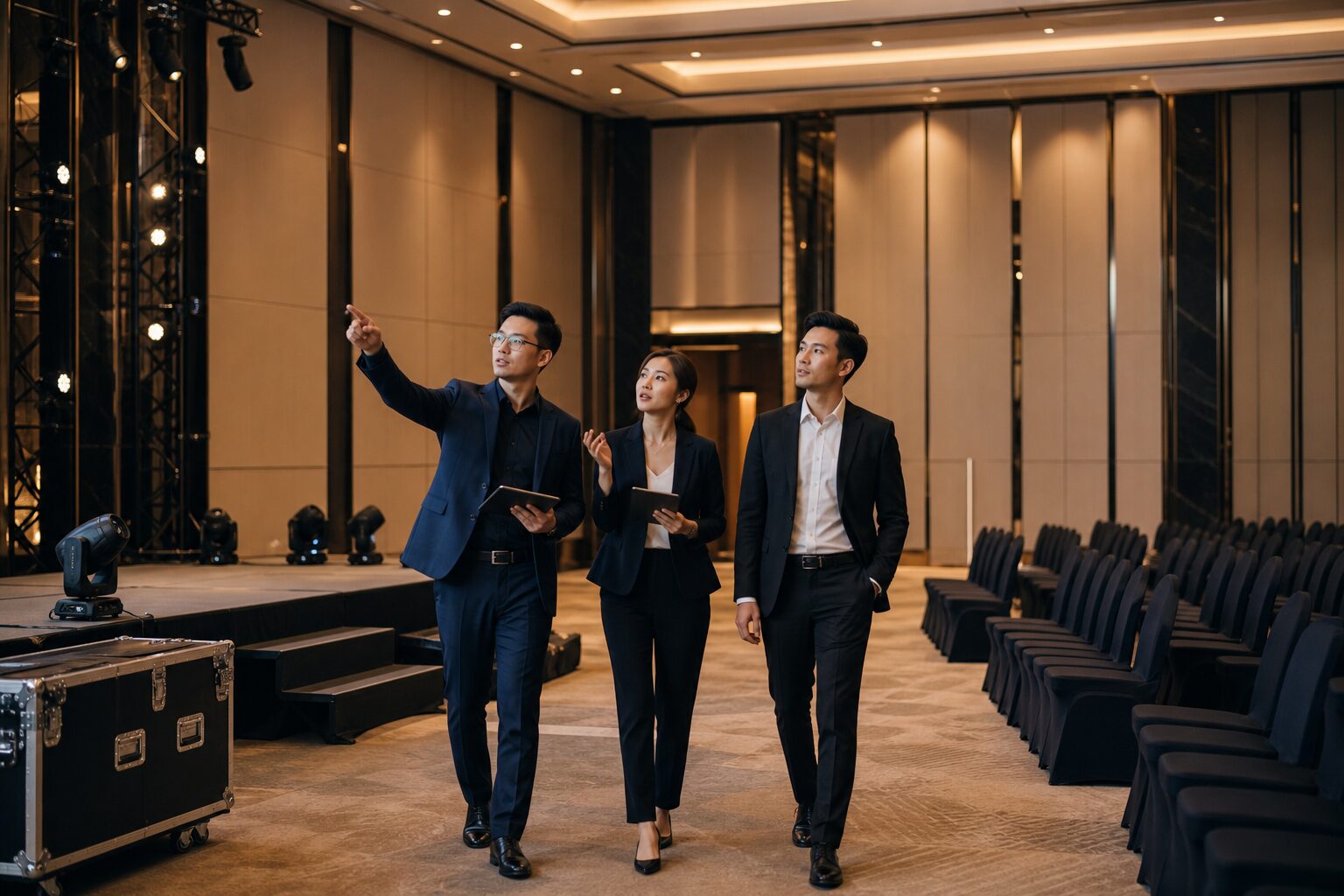
Look for events similar in format, attendance, complexity and audience. Ask what the company was responsible for, not only what appears in photographs.
Expect itemised inclusions, payment milestones, assumptions, exclusions and change terms. A total without scope is difficult to compare.
Ask how the team would respond to weather, speaker changes, supplier delays or a compressed setup. Useful answers identify decisions and contingencies.
Understand what is handled directly and what is supplied by partners. Neither model is automatically better; accountability and oversight are what matter.
Assess whether updates are clear, timely and structured. Confirm who owns the project after appointment and how decisions will be documented.
Speak with recent clients where possible. Ask about budget control, changes, event-day conduct and what they would do differently.
A partner should understand your audience, brand standards and priorities such as accessibility, inclusion or sustainability rather than jumping straight to logistics.

Due diligence
A strong image does not show whether the event stayed on schedule, how suppliers were coordinated or whether the final result matched the approved scope. Ask for a walk-through of a comparable project: the original objective, constraints, proposed solution, operating plan and lessons learned.
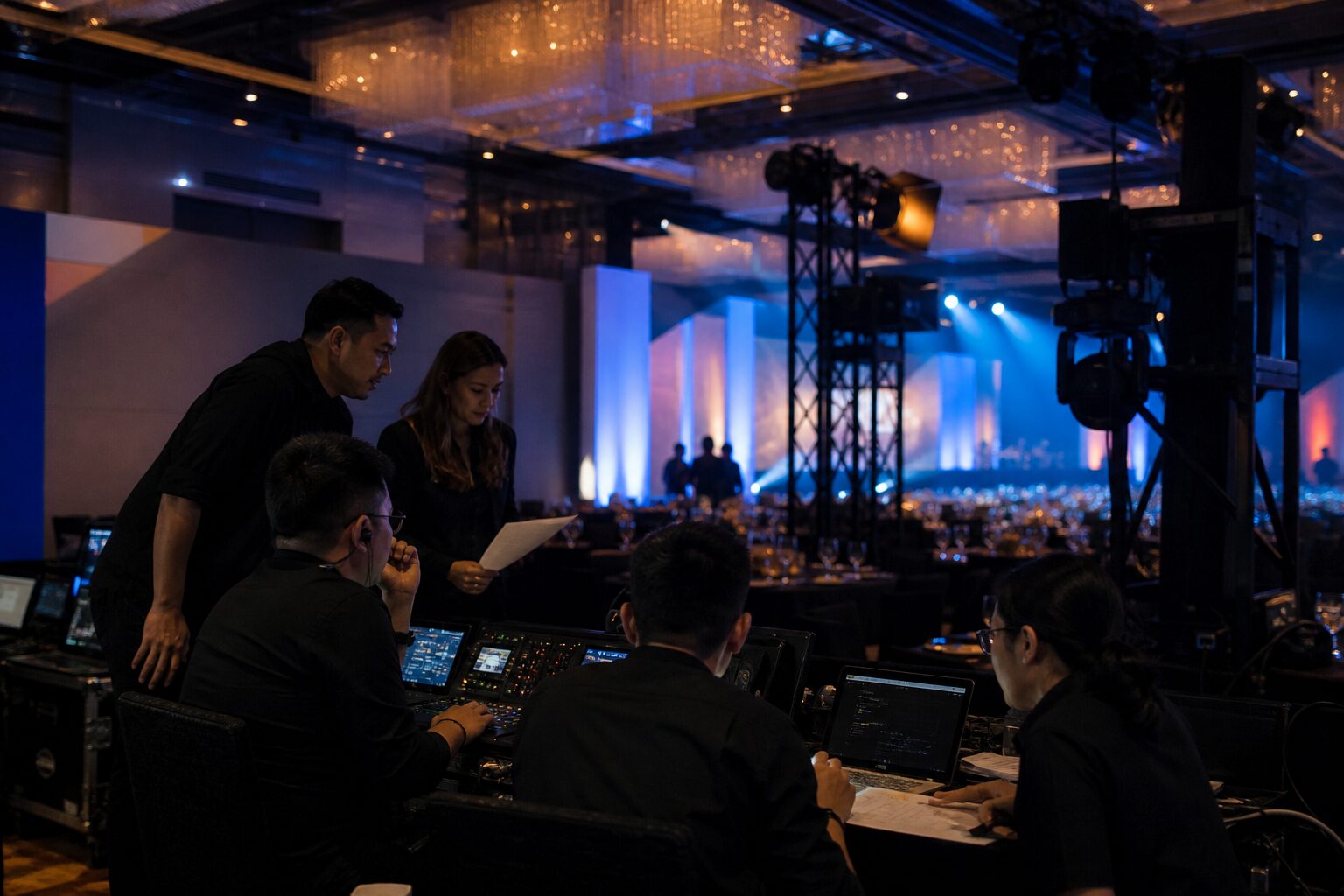
Meet the people who would actually manage your event. The presenter may not be the project lead, producer or event-day contact. Clarify responsibilities, escalation routes and who can approve changes. For production-heavy programmes, ask how technical, venue and supplier information is consolidated into the run sheet.
Match capability to format
Prioritise project governance, stakeholder management, guest registration, production planning and the ability to coordinate speakers, content and technical requirements. For a deeper service overview, see corporate event organising in Singapore.
Look for purposeful activity design, inclusive facilitation, clear instructions and a format matched to team objectives. Programmes such as an Amazing Race in Singapore also require route, timing and weather decisions.
Entertainment, stage flow, audiovisual production, meal-service timing and transitions all shape the experience. Ask how the company keeps guests engaged between formal segments.
Age range, capacity, queues, shade, wet-weather options and activity zoning matter. The organiser should show how crowd movement and programme choices fit families rather than a single participant profile.
A virtual component needs more than a meeting link. Clarify streaming, remote-speaker support, show calling, audience interaction, recording and fallback arrangements.
Roadshows, launches and interactive installations can involve permits, venue rules and specialist suppliers. Ask who owns each approval and how interfaces between suppliers are managed.

Commercial clarity
Event proposals are often structured as a fixed project fee, a management fee with supplier costs, or a per-participant price. Each can be appropriate. The comparison only becomes meaningful when the underlying deliverables, quantities, hours, staffing, technical specifications and third-party assumptions are visible.
Ask what can change the total: attendance, venue access, rehearsal time, overtime, transport, permits, power, rigging, weather alternatives, content revisions or supplier availability. Confirm whether GST and third-party charges are included, excluded or estimated. A documented change process protects both the organiser and the event company.
Useful question: “If our attendance, venue or programme changes, which line items change and who must approve them?”
A disciplined shortlist
State what the event should achieve and how success will be evaluated.
Share a realistic range so proposals can prioritise rather than guess.
Select companies using relevant work, references and delivery capability.
Give every candidate the same requirements, constraints and deadline.
Compare scope, assumptions, team, timeline, risks and commercial terms.
Speak with the people who will plan and operate the event.
Verify references and discuss a relevant case study in detail.
Record deliverables, dates, payment terms, changes and responsibilities.
Working relationship
A planning partner should begin by understanding objectives, audience, constraints and decision-making. The proposal should connect those inputs to a workable concept, scope and operating approach rather than forcing every brief into the same template.
During planning, look for clear ownership, documented approvals and early identification of dependencies. On event day, roles, timings, communications and escalation routes should be understood by the delivery team. Afterward, the organiser should be able to review agreed outcomes and practical lessons for future events.
Continue your research with the event companies in Singapore overview, explore event management services, or review the corporate event organiser resource hub.
Frequently asked questions
There is no reliable single figure without a defined brief. Event type, attendance, venue, production, staffing, logistics, customisation, suppliers and date all affect the total. Compare itemised written proposals on equivalent scope.
Lead time depends on complexity, venue and supplier availability. Begin earlier for major productions, constrained venues or high-demand dates. Ask shortlisted teams for a schedule based on your actual approval milestones.
The labels are used differently across the industry. Focus on contracted responsibility: who develops the concept, manages suppliers, controls the budget, produces the run sheet and leads delivery on site.
It can, provided the scope and specialist responsibilities are clear. Ask who selects, contracts, briefs and manages each entertainment or production supplier and how approvals are recorded.
Verify the registered business, written contract, references, relevant insurance and the people responsible for delivery. Review independently available information and do not rely only on a polished proposal.
Pressure to commit without a complete written scope is a serious warning. Other concerns include vague deliverables, unclear exclusions, no change process and reluctance to explain who will manage the work.
Prepare a comparable brief
Provide your objective, preferred date, attendance range, venue status, programme needs and working budget. These details help the team respond with a tailored written scope and proposal.
Get Out! Events provides event management SG companies can rely on for corporate D&Ds, team building, family days, conferences, product launches and large-scale activations. Our Singapore team manages the brief, creative planning, vendors, logistics, production flow and on-site show-day coordination.
Dinner and dance planning | team building events | family day events | awards and conferences