What Makes a Corporate Event Truly Memorable?

TL;DR: Design around the people attending: personalise the welcome, give the programme a clear beginning, shared high point and intentional close, and make room for guests to connect. Support those moments with clear guest flow, reliable audio and useful post-event follow-up.
It’s not the venue or the menu that makes a corporate event unforgettable—it’s the moments that spark connection, emotion, and surprise. Whether you’re organising a corporate dinner and dance or a leadership summit, these principles apply equally. In this post, we unpack the psychology of memorable events and how to design experiences that stay with your guests long after the night ends.
Why Memory Matters in Corporate Events
In a world overflowing with meetings, webinars, and surface-level networking, people crave experiences that make them feel something. Whether it’s awe, joy, belonging, or inspiration, a truly memorable event activates emotion—and emotion fuels memory.
1. Personalization: How to Make Every Attendee Feel Seen
Guests remember how an event made them feel seen. From custom welcome kits to personalized name cards or shoutouts during speeches, the smallest touch can leave the biggest impression. Think about segmenting your audience (by team, seniority, or region) and designing small surprise-and-delight moments tailored for each group.
2. Craft a Narrative to Give Your Event a Beginning, Middle, and End
Treat your event like a journey. There should be a clear beginning (welcome or anticipation), a middle (the experience peak), and an ending (a sense of closure or climax). This structure taps into the brain’s natural love for story—and gives your guests something to tell their friends about.
3. Design for “Wow Moments” That Guests Will Share
Identify 1–2 “Instagrammable” or share-worthy moments. It could be a surprise performance, a flash mob, a reveal wall, or a high-touch interactive station. These are the memories guests will photograph, post, and talk about.
4. Facilitate Real Connection with Structured Networking
Networking is better when it’s structured. Try adding games, storytelling prompts, or team-based missions. Formats like structured team building activities are specifically designed to turn groups of strangers into collaborative teams. This transforms strangers into collaborators, and collaborators into future advocates.
5. Close With Intention — Not Just a Programme End
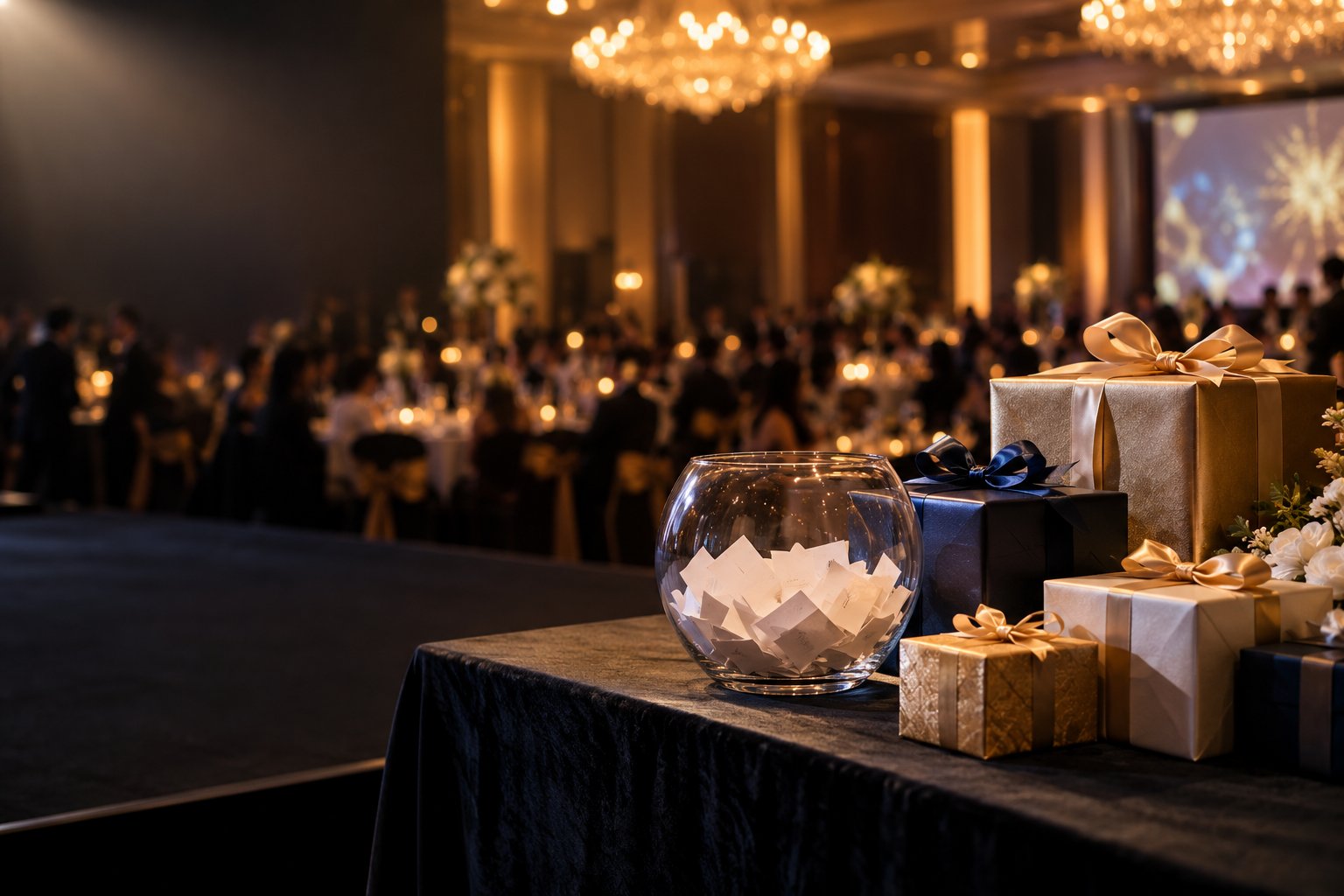
Too many events fizzle out. A memorable event ends with purpose—an award, a surprise gift, a team toast, or a powerful video that brings everything full circle. Don’t just close the program. Leave people moved.
Pro Tip: Use post-event follow-ups (thank-you notes, recap videos, shared photo albums) to reinforce memory and deepen emotional impact.
About the Author
Stacy Wee, Co-Founder of Get Out! Events. A passionate event strategist with a track record of delivering exceptional corporate events across Asia. Stacy has spent over a decade crafting experiences that resonate and leave a lasting impact.
LinkedIn | https://www.linkedin.com/in/stacywee/
Ready to Plan Your Event?
Need Help With Your Next Event?
Get Out! Events is a Singapore event company. We specialise in dinner and dance, team building, family days, and corporate event management. Get a free quote →
Looking for professional event management in Singapore? Get Out! Events can help you plan your next corporate event.
A memorable corporate event planning framework
A corporate event becomes memorable when the experience has a clear point of view and the operations support it. It is not enough to add a theme, photo booth or lucky draw. Guests remember whether the event respected their time, made them feel included, gave them a useful shared moment and made the company look organised.
Start with the emotion you want guests to leave with: appreciated, energised, aligned, impressed, connected or proud. That choice should guide the format. A leadership townhall needs clarity and trust. A family day needs comfort and range. A gala dinner needs pacing and polish. A team-building event needs participation without embarrassment. A product launch needs a strong reveal and a next action.
What makes the difference
- Audience fit: design for the actual age range, seniority, culture, language comfort, mobility and energy level in the room.
- Flow: remove dead time between registration, speeches, activities, food, awards, entertainment and departure.
- Participation: create moments where guests do something together, not just sit through a programme.
- Operational confidence: guests relax when signage, audio, seating, timing, food and staff instructions feel clear.
- Story: connect the event to a company milestone, campaign, value, customer promise or shared achievement.
Get Out! Events would turn a desire for a memorable event into practical planning choices: what to keep simple, where to create surprise, how to move guests through the space, which suppliers matter most and what the run sheet must protect. The best events do not feel memorable because every minute is packed. They feel memorable because the important moments have room to land.
If you are briefing an organiser, share what guests usually complain about and what leadership wants them to remember. That is often more useful than starting with a theme, because it reveals the real job the event must do.
Memorable event briefing questions
Before asking for ideas, brief the organiser on the real audience. Who is excited to attend, who is skeptical, who needs to be recognised and what would make leadership call the event a success? These answers change the format more than a theme deck does.
Also define what should happen after the event. A memorable staff event may need better morale, a client event may need warmer relationships, and a product event may need qualified follow-up. When the next action is clear, the experience can be designed with purpose.
Memorable event operational proof
The operational proof of a memorable event is visible in small details: guests know where to go, speakers know when to move, food arrives at the right time, music does not fight the speeches, and staff can answer basic questions without hunting for the organiser. These details are not glamorous, but they create the confidence that lets the emotional moments work.
For corporate events, memory also comes from relevance. A playful activity that fits the culture will land better than an expensive performance that feels disconnected from the group. A simple recognition segment can be powerful if names, photos and timing are handled properly.
Memorable event post-event value
Plan the post-event value before the event starts. Decide whether guests should receive photos, a recap video, a follow-up offer, internal comms, survey links or sales outreach. The memory lasts longer when the event produces useful material after the room is packed down.
Final planning checks for What Makes a Corporate Event Truly Memorable?
Before confirming this corporate event, the organising team should pressure-test the actual operating conditions at the venue: guest arrival timing, loading access, room turnover, AV ownership, registration flow, food service, signage, photography, speaker movement and the point person for last-minute decisions. These details decide whether the event feels smooth, especially when senior stakeholders, clients or public guests are involved.
Get Out! Events would use this page as a starting brief, then convert it into a practical run sheet with responsibilities, assumptions and fallback notes. For a lean event, that may be a simple manpower and timing plan. For a higher-stakes event, it should include venue coordination, supplier briefing, stage cues, guest movement, safety notes and a clear escalation path.
- Confirm the audience: headcount, arrival pattern, VIPs, accessibility needs and whether guests are employees, clients, partners or families.
- Confirm the space: setup window, teardown deadline, lift or loading access, AV restrictions, branding limits and wet-weather or crowd-flow constraints.
- Confirm the operating owner: who manages the venue, suppliers, programme, emcee, changes, guest issues and final close-out.