
Carnival Event Planning in Singapore: A Step-by-Step Guide for Corporate Teams
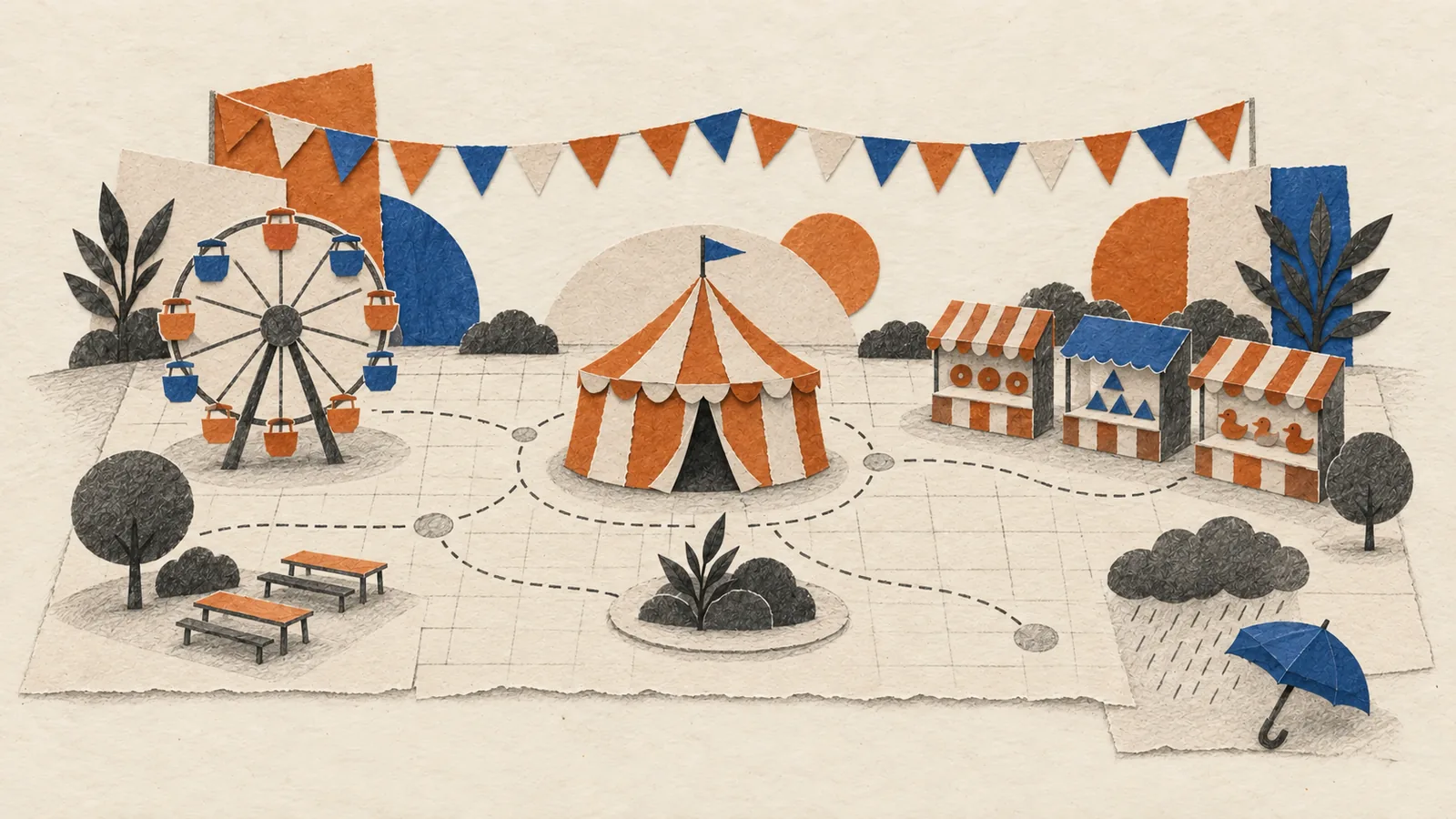
Carnival event planning comes down to seven decisions made in the right order: the goal and guest mix, the date and venue, permits, the booth and zone plan, vendors, the wet-weather plan and the run of show. Get those in order and the games, food and prizes fall into place. This guide walks corporate teams in Singapore through each step.
It is written for HR, admin and employee engagement teams planning a family day carnival, a year-end carnival or a staff appreciation fair. If you want game ideas first, see our carnival games for family day. If you would rather hand the planning over, ask us for a proposal.
Step 1: Set the goal and the guest mix
Start with why the carnival is happening. A family day for staff and children needs a very different plan from a lunchtime office carnival for adults only. Write down the goal in one sentence before you look at a single booth.
Then pin down the guest mix, because it drives almost every later decision:
- Headcount. Confirmed staff plus partners and children, not just the staff list.
- Age range. Toddlers, primary school children, teens and older relatives all play differently.
- Arrival pattern. A fixed start time fills every booth at once. A drop-in window spreads the crowd.
- Needs. Dietary requirements, mobility access, prayer space and quiet areas for young children.
Keep this as a short brief. You will hand it to every venue and vendor later, so it saves you repeating yourself.
Step 2: Choose the date, format and venue
Pick two or three possible dates before you approach venues. School holidays, public holidays and your own busy periods all affect turnout. Weekend carnivals suit families, while weekday carnivals suit office-only crowds.
Next, choose the format. Most corporate carnivals fall into one of three types:
- Office carnival. Booths in a pantry, lobby or event space for a few hours. Low travel, limited space.
- Indoor venue carnival. A hall or function room with power, air conditioning and toilets. Weather-proof, but the floor plan is fixed.
- Outdoor carnival. A park, field or open space with tentage. Room to spread out, but weather and permits need more work.
Outdoor sites in parks have their own rules. NParks says you must make a booking if your event has more than 15 participants or requires set-up such as a tentage or a sound system. It also states that bookings must be submitted at least one calendar month before the commencement of the event. Check the details on the NParks event venue booking page.
Whichever venue you shortlist, ask for a scaled floor plan, the load-in window, power points and the nearest toilets. You will need all four for the next steps.
Step 3: Check permits and safety rules early
Permits are where carnivals most often run late, so check them before you sign with vendors. This section is general information, not legal advice. Your venue and vendors should confirm what applies to your exact set-up.
Three official sources are worth reading first:
- Fire safety. SCDF says that if a change of use is temporary, up to 60 days, and involves stage shows, exhibitions or carnivals, a temporary change of use permit is required. Its listed conditions include a 3 metre limit on booth height and clear passageways of at least 1.2 metres between booth rows.
- Public entertainment. SPF explains that some events are exempt from a Public Entertainment licence if a stipulated set of conditions is met. Some exempt events still require the organiser to notify the Police at least 7 days before the event. Read the SPF overview of the Public Entertainment licence.
- Everything else. The GoBusiness e-Adviser for Events helps you work out which licences and permits apply to your event.
Fire safety rules also shape your layout. SCDF lists that open-flame activities are prohibited and that all escape routes must remain unobstructed at all times. Brief food and craft vendors on this before they plan their stations.
Step 4: Plan the booth mix and the zones
Now turn the guest brief into a floor plan. Do not start with a list of game names. Start with roles: what each area of the carnival is for.
- Game booths. Short, repeatable games with a clear queue and a simple prize or stamp.
- Food and drink. Snack stations, a meal area and plenty of seating in the shade.
- Kids zone. Gentle activities for younger children, with space for parents to watch.
- Stage or emcee point. Welcome, lucky draw and prize giving, timed to pull the crowd together.
- Rest and help. A quiet corner, first aid, a lost-and-found point and a clear information desk.
Count how many guests each booth can serve in an hour, then compare that with your headcount. If the numbers do not match, people queue instead of playing. Our carnival booth mix guide shows how to size the mix and allow for each booth’s real footprint.
Leave walking space between booth rows, and keep entrances, exits and emergency routes clear. Draw the queues on the plan, because a queue can block a path the booth itself does not.
Step 5: Book vendors with a clear brief
Most carnivals use several suppliers: game booths, food, tentage, sound, an emcee and sometimes a photographer. Send each one the same short brief from Step 1, plus the floor plan and the timing.
Ask every vendor to confirm in writing:
- What exactly they supply, including staff, props, prizes and set-up time.
- How much space and power they need, and how long they take to pack down.
- How they handle queues, children and wet weather.
- What insurance and safety measures they have in place.
Our family day carnival vendor checklist lists the questions to settle before you book. Use it to compare quotes on the same basis.
Food needs extra care when children and older guests attend. The SFA guide for ordering catered meals says to engage only licensed food caterers. It also says no food should be kept at room temperature for more than 4 hours from the time it was cooked to the time it is consumed. Read the full SFA catered meals guidelines and share them with your food vendors.
Step 6: Build the wet-weather and lightning plan
Every outdoor carnival in Singapore needs a weather plan, and it should be written before you book. Singapore’s weather service notes that Singapore has one of the highest rates of lightning activity in the world. Its lightning advice says to seek shelter in a building or car.
That advice matters for carnival layouts. The same guide says not to seek shelter under tall trees or small structures like a tent. So a field full of tents is not a shelter plan. Agree these points with your venue and vendors:
- Trigger. Who decides to pause outdoor activities, and on what information.
- Shelter. Which building guests move to, and how long that takes for your headcount.
- Restart. The guide says to wait at least 30 minutes after thunder is last heard before resuming outdoor activities.
- Fallback. Which booths can move indoors, and which ones will simply stop.
Tell guests about the plan in the invitation. People are more relaxed about a pause when they expected one.
Step 7: Write the run of show and brief the team
A carnival can feel loose to guests, but it needs a tight plan behind the scenes. Write a simple run of show that covers load-in, booth checks, doors open, stage moments, the lucky draw, last games and pack-down.
Give each person on your team one clear role. Common roles include the overall lead, a vendor lead, a stage and emcee lead, a registration and information desk, and a floater who handles problems. Share a contact list and agree how you will reach each other on the day.
Plan photography too. PDPC guidance gives examples of good notice, such as stating in the invitation that photographs of attendees will be taken. Another example is putting up an obvious notice at the reception or entrance of the function venue. See the PDPC advisory guidelines on selected topics for detail.
What drives the cost of a corporate carnival
Carnival budgets vary widely, so it helps to know what moves the number. The main cost drivers are:
- Headcount and duration. More guests and longer hours need more booths and more staff.
- Venue type. Outdoor sites often add tentage, power, toilets and wet-weather back-up.
- Booth count and type. Staffed game booths, inflatables and craft stations each carry different set-up and manpower needs.
- Food and drink. Snack stations, full meals and dietary options change the catering line.
- Production. Stage, sound, emcee, photography and decor.
- Prizes and gifts. Game prizes, lucky draw items and take-home gifts.
The fastest way to a realistic figure is a written brief with your headcount, date, venue type and must-have elements. Vendors can then quote like for like. If you are planning a year-end version, our guide to a corporate Christmas carnival covers seasonal formats.
Common carnival planning mistakes
- Booking booths before the floor plan. Booths that do not fit the space end up blocking paths.
- Too few booths for the crowd. Long queues make a carnival feel slow, whatever the games are.
- No real wet-weather plan. Tents alone are not enough when there is lightning.
- Leaving permits to the last week. Some steps have fixed lead times you cannot shorten.
- Forgetting older guests and toddlers. Seating, shade and quiet corners keep families there longer.
For a wider view of running a staff and family event, see our family day event planning page.
Frequently asked questions
How far ahead should we start carnival event planning?
Start as early as you can, because some steps have fixed lead times. NParks asks for park bookings at least one calendar month before the event, and SPF needs some exempt events notified at least 7 days ahead. Vendor and venue availability usually sets the rest of the timeline.
Do we need a permit for a corporate carnival in Singapore?
It depends on the venue, the activities and who can attend. SCDF says a temporary change of use permit is required when a temporary change of use of up to 60 days involves a carnival. Use the GoBusiness e-Adviser for Events to check which licences apply to your plan.
How many booths does a company carnival need?
There is no single number. Work it out from headcount, the length of the event, the age mix and how long each game takes to play. Our booth mix guide walks through the maths and shows how to balance games, food and quieter zones.
What happens if it rains or there is lightning?
Plan a wet-weather version before you book anything. Singapore’s weather service says not to shelter under tall trees or small structures like a tent, and to wait at least 30 minutes after thunder is last heard before resuming outdoor activities.
Can we take photos of staff and their families at the carnival?
Yes, but tell people first. PDPC guidance gives examples such as stating in the invitation that photographs will be taken and putting up an obvious notice at the entrance. Take extra care with photos of children and ask parents before publishing.
Plan your carnival with us
We help Singapore teams plan corporate and family day carnivals, from floor plans and booth mix to vendors, weather plans and the run of show. Share your date, headcount and venue idea, and we will come back with options and a quote. Contact us to get started.