Family Day Activities for Kids in Singapore: 30 Best Ideas
Family day activities for kids in Singapore make or break the event. That’s the part most HR teams underestimate when they plan a corporate family day — they spend weeks on catering and venue, and then on the day, the kids are bored by 11am and the parents spend the rest of the event chasing toddlers instead of bonding with colleagues.
Get the kids programme right, and the adults relax. People socialise. The event achieves what it’s supposed to: real connection between colleagues and their families.
This guide covers 30 family day activities for kids in Singapore, ranked by age group and energy level. What consistently works, what flops, and how to structure a programme so that no child — toddler to tween — is left without something to do.
The Kid Problem at Corporate Family Days (and How to Solve It)
The kid problem is this: corporate family days are designed by adults, for adults, with kids treated as an afterthought. A bouncy castle gets thrown in. Maybe face painting. And then someone wonders why three-year-olds are screaming and twelve-year-olds are on their phones.
The solution is treating the kids’ programme as a separate, parallel track — not a side attraction.
This means:
- Dedicated kids zone with enough activities to occupy a range of ages for the full event duration
- Supervised activity stations with appropriate staffing ratios (one adult per 8–10 kids)
- Age segmentation: toddlers, primary school kids, and tweens all need different activities
- Transition plan: activities for kids also arriving at different times throughout the day
When you plan this properly, parents can actually let their kids go and enjoy the adult programme. That’s when family days succeed.
Age-Appropriate Activities: By Age Group and Energy Level
Toddlers (2–4 Years)
This age group needs simple, sensory, and supervised. They can’t follow complex rules, don’t care about winning, and need frequent adult supervision.
Best for toddlers:
- Ball pools and soft play areas
- Sensory play stations (sand, water, kinetic sand)
- Simple craft tables with crayons and stickers
- Bubble machines and bubble wands
- Ride-on toys and mini obstacle courses (low height, soft surfaces)
What doesn’t work: competitive games, team activities, anything with small parts.
Supervision ratio: 1 adult per 5 toddlers minimum.
Primary School Kids (5–11 Years)
The high-energy, high-fun group. This age range loves competition, games with simple rules, and anything physical. They’re also the most forgiving of minor organisational hiccups — if the game is fun, they’ll go with it.
Best for 5–11 year olds:
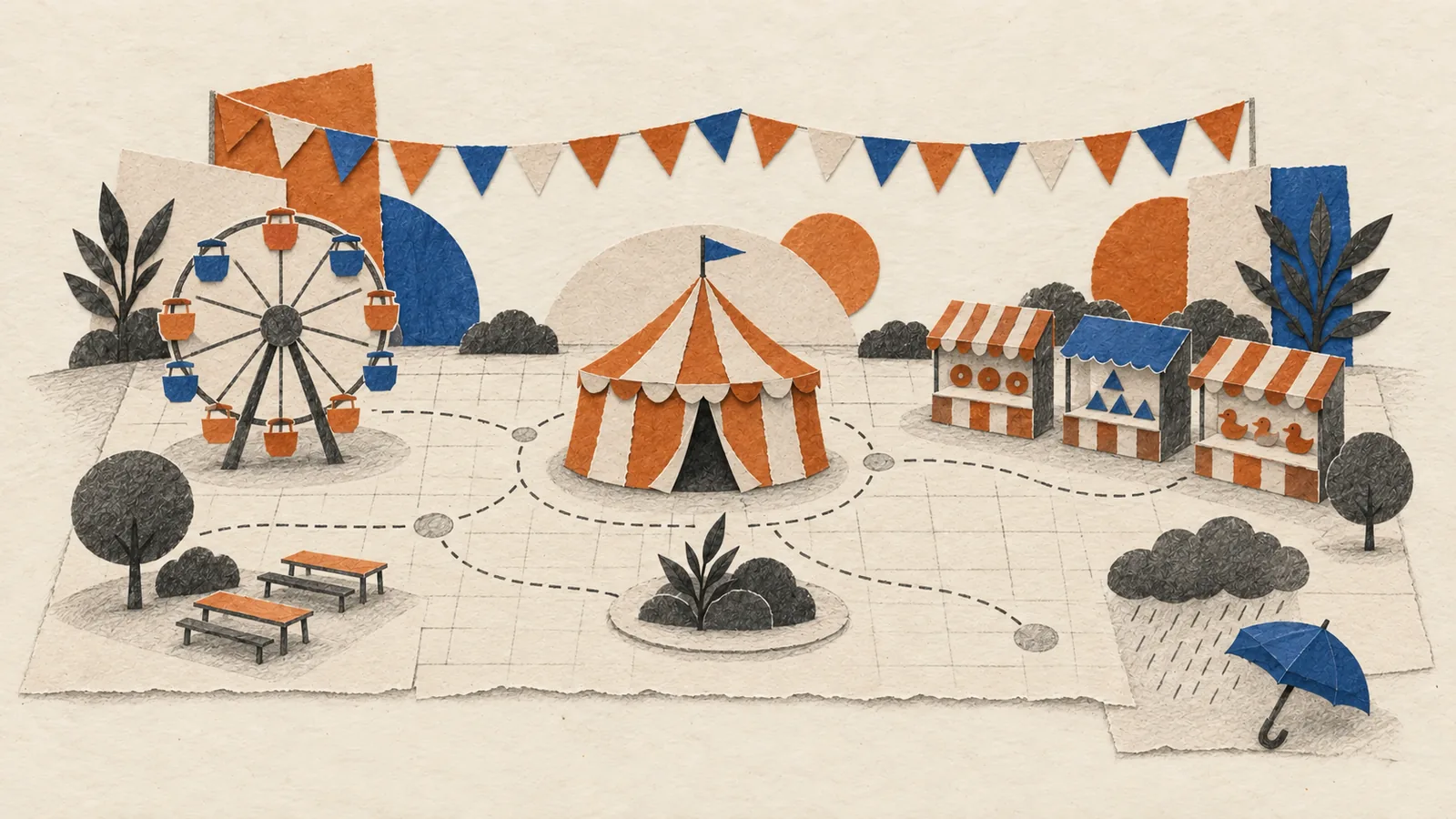
- Carnival games (ring toss, duck pond, bean bag throw)
- Obstacle courses and inflatable structures
- Team relay races
- Craft workshops (tie-dye, slime, friendship bracelets)
- Sports games (modified football, frisbee, tug-of-war)
- Science activities (simple experiments, balloon rockets)
Tweens (12+)
The hardest group to please at family days. Tweens are too old to be excited by bouncy castles and too young to be interested in adult activities. The key is treating them with respect — giving them real roles and real challenges.
Best for tweens:
- Sports tournaments (actual competitive format, not watered down)
- Technology challenges (photography, video creation)
- Escape room style puzzles
- Cooking or baking workshops
- Team-based games with genuine stakes (prizes worth wanting)
What doesn’t work: anything that feels “babyish.” They will disengage publicly and loudly.
30 Activity Ideas for Kids at Family Days
Carnival Games (Works for All Ages)
1. Ring Toss — Classic, simple, adjustable difficulty by distance. Works from age 4+. Cost: $200–400/stall.
2. Duck Pond — Toddler favourite. Every duck wins a prize. Zero frustration, maximum smiles. Best for ages 2–6.
3. Bean Bag Throw — Adjustable distance by age. Easy to staff. Ages 4+.
4. Ball-in-Bucket Toss — Simple accuracy game. Great for mixed-age groups. Ages 5+.
5. Hook-a-Duck — Fishing rod, plastic ducks in a pool. Universally appealing. Ages 3+.
6. Spin-the-Wheel — No skill required. Pure luck. Every age loves a prize wheel.
7. Sponge Throw — Especially popular outdoors in Singapore’s heat. Target: a willing adult staff member. Ages 5+.
8. Mini Bowling — Scaled-down pins, soft ball. Ages 3+. Can run indoors.
Inflatables and Physical Activities
9. Bouncy Castle — The reliable crowd-pleaser. Works for ages 3–10. Beyond that, tweens feel embarrassed.
10. Obstacle Inflatable — Multi-stage inflatable obstacle course. The step up from bouncy castles that older kids will engage with. Ages 6–14.
11. Inflatable Slide — Works in combination with other inflatables. Toddler-friendly with supervision. Our inflatable park setups work well for family days.
12. Tug-of-War — Zero equipment needed beyond a rope. Works for ages 6+. Adults love this too. Classic family day activity.
13. Sack Races — Burlap sacks, open field, let them go. Simple, high energy, genuinely funny. Ages 4+.
14. Egg and Spoon Race — Coordination, concentration, and natural comedy. Ages 5+.
15. Water Balloon Toss — Outdoor only, Singapore heat means everyone welcomes it. Ages 5+. Stock plenty of balloons.
Creative Workshops
16. Tie-Dye T-Shirts — Kids create a wearable souvenir they’ll actually use. Pre-soak shirts in advance. Ages 6+. Cost: $25–45/child including materials.
17. Slime Making — Wildly popular with the 6–12 age group. Simple chemistry, satisfying tactile result. Messy — prep accordingly. Cost: $15–25/child.
18. Friendship Bracelet Making — Quiet, seated, works for mixed ages. Girls especially love this. Ages 5+. Cost: $10–20/child.
19. Painting and Art Jamming — Canvas, paint, brushes. Facilitated or self-directed. Ages 4+. Works for the full duration of an event if stations rotate. Our art jamming formats adapt well for kids.
20. Sand Art Bottles — Fill a bottle with coloured sand in layers. Takes 30–60 minutes per child. Quiet, absorbing, and they take home a unique piece. Ages 5+.
21. Cookie Decorating — Pre-baked cookies, icing, sprinkles. Simple, achievable for any age. Takes 20–40 minutes. Edible souvenir. Ages 3+.
22. Balloon Animals — A skilled balloon artist can keep a queue of kids entertained for hours while the adults mingle. Passive for parents, high-engagement for kids. Ages 2+.
Interactive Science and STEM
23. Balloon Rockets — Thread a string across a space, attach a balloon rocket, release. Kids design and test. Ages 6+. Cheap to set up, high engagement.
24. Bottle Rockets — Water bottle rockets launched from a pump. Outdoor only. Ages 7+. High wow factor.
25. Oobleck — Cornstarch and water. Non-Newtonian fluid that acts like both liquid and solid. Kids go nuts for it. Easy setup, memorable. Ages 4+.
26. Marble Run Building — Pre-cut foam tubing, tape, creativity. Teams of kids build marble runs. Tests engineering and collaboration. Ages 7+.
Sports and Outdoor Games
27. Mini Olympics — Multiple mini-sport stations in a relay format. Teams compete across running, jumping, throwing, and balance events. Ages 6+. Works well for 50+ kids.
28. Parachute Games — Giant parachute, group cooperation games (popcorn, cat and mouse). Works for ages 4–10. High energy, universally beloved.
29. Giant Games — Oversized Jenga, Connect 4, Chess. Visually striking, works for ages 5+. Adults also play. Good for mixed family activity.
30. Capture the Flag — Classic team game requiring strategy, speed, and teamwork. Requires open space. Ages 8+. Works best with 20+ kids split into two teams.
Mixed-Age Activities: Things Families Can Do Together
Some of the best family day moments happen when parents and kids compete together. Activities that work across ages:
If you are choosing activities based on bonding outcomes rather than just keeping kids occupied, see our family bonding activities Singapore for company family days guide.
If the shortlist is leaning outdoors, use our outdoor family day activities Singapore guide to plan shade, hydration points, stroller flow, and wet-weather backups before you lock the venue and vendor mix.
- Giant Jenga — A 7-year-old can play against Mum. Simple rules, shared tension, natural conversation.
- Tug-of-War — Mix generations into the same team. The laughter that happens when someone falls is the best team building there is.
- Relay Races — Family teams. The parent running the last leg of a relay while their kid cheers from the sideline is a memory.
- Trivia (family teams) — Kids answer the pop culture questions. Parents answer the general knowledge ones. It works.
- Carnival Games — No age limit on wanting to win a stuffed toy.
Safety Considerations: Supervision, Wristbands, Lost-Child Protocols
Kids and safety at events: you need a plan before the event, not a response after something goes wrong.
Wristband system — Every child gets a wristband at registration with their name and parent’s mobile number. Mandatory, not optional. Use permanent marker.
Designated kids zone — The kids programme should run within a clearly defined, cordoned area. Not because kids are dangerous, but because it allows supervision ratios to be maintained and parents to know where to find their child.
Supervision ratios:
- Toddlers (2–4): 1 staff per 5 children
- Primary (5–11): 1 staff per 10 children
- Tweens (12+): 1 staff per 15 children
Lost child protocol — Designate a “lost child point” at registration/information. Make it visible and brief parents on it at the start of the event. If a child is separated, freeze the exits until located.
First aider on-site — Any event with more than 30 children should have a certified first aider. For events with inflatables, this is non-negotiable.
Inflatable safety — Only use inflatables from certified vendors. Check that weight limits are posted and enforced, that supervisors are stationed at each inflatable, and that the structure is properly anchored. Our inflatable rentals include trained operators as standard.
How to Balance Adult Programme with Kid-Focused Zones
The best family days run two parallel tracks: the adult programme and the kids programme. The error is either making them completely separate (parents feel guilty not being with their kids) or trying to merge them entirely (kids are bored during adult speeches, adults are distracted trying to watch children).
The right structure:
- Arrival and registration — Family time, everyone together
- Opening programme — Short (≤20 minutes), kids and parents together
- Activity phase — Kids go to kids zone, adults do adult activities, with cross-over points where families can mix
- Lunch/F&B — Families together
- Afternoon activities — Option to continue as families or split again
- Closing — Awards, lucky draw, everyone together
Build explicit “family crossover” moments into the programme — relay races where kids and parents compete together, a family photo station, a joint activity. These moments are what people remember.
For a detailed guide to planning the full event, see our family day organiser Singapore service page.
FAQ
How many kids’ activities do we need for a 4-hour family day?
Plan for 5–7 activity options across the event. Kids don’t stay at one station for more than 20–30 minutes, so variety matters more than depth. A combination of carnival games, one inflatable, one creative workshop, and one sports game covers most age groups for a full half-day programme.
What’s the best activity for a mixed age group (5–12 year olds)?
Carnival games are the most reliable cross-age option. Ring toss, bean bag throw, and spin-the-wheel work regardless of age. For something more structured, relay races in mixed-age family teams create natural participation across the age range.
Do we need to hire professional kids’ activity vendors, or can we DIY?
For small events (under 30 kids), DIY carnival games and craft stations are manageable with enough staff. For larger events, hire professional vendors — they bring equipment, trained staff, and the experience to manage crowd flow. The cost ($1,500–$5,000 for a full kids zone) is worth it when you consider the alternative is stressed event staff trying to manage 80 bored children.
How do we handle kids with special needs at a family day?
Brief your activity vendors in advance about any attendees with special needs. Choose at least some activities that are accessible regardless of physical ability — craft stations and carnival games work for most children. Designate a quiet area away from high-stimulation zones for children who need it. Have a staff member specifically briefed on supporting families who need extra help.
Should we charge parents for kids’ activities or include them in the per-pax cost?
Include them. Separating kids’ activities out as optional extras creates awkwardness and resentment. Build the kids’ programme into your overall event budget and reflect it in the per-pax cost. It simplifies registration and ensures every family has equal access.