Family Day Planning Checklist Singapore: 10-Week Timeline
Planning a company family day in Singapore? Most HR teams start with a venue and a budget, then realise halfway through that the real difficulty is balancing kids, adults, food, logistics and weather. This checklist gives you a practical 10-week planning timeline you can follow, whether you are running a 50-pax office picnic or a 600-pax corporate family carnival.
Use this guide if you are evaluating venues, activities, inflatables, food stations, event flow and vendor sequencing. If you need done-for-you support, see our family day organiser Singapore service page.
If you are still getting internal approval before vendors quote, use our family day proposal template Singapore to structure the event objective, budget range, scope, and evaluation criteria before procurement starts.
Why Family Days Need a Different Planning Process
Corporate family days are harder than standard staff events because your audience includes employees, spouses, children, and sometimes grandparents or leadership guests. That means the event needs to serve different ages, comfort levels and activity preferences at the same time.
A successful family day usually needs:
- One easy anchor attraction or format
- Separate activity types for different age groups
- Simple food and queue flow
- Rest / shade / stroller / toilet planning
- Wet-weather backup for outdoor events
The earlier you plan these, the less likely your event is to feel chaotic on the day.
10-Week Family Day Planning Checklist
Week 10: Define the event objective and rough headcount
Before comparing venues or activities, agree on what the family day is actually for. Internal appreciation? Employer branding? Post-project celebration? Community bonding? The clearer the objective, the easier it is to decide whether the right format is a carnival, picnic, Amazing Race, inflatable park setup, or an indoor family festival.
At this point, estimate:
- Total employee count
- Expected family attendance rate
- Likely child age ranges
- Preferred month / school holiday timing
- Budget range
Week 9: Shortlist the venue type
Choose the venue based on your format, not the other way around. If you want inflatable parks, stage games and food booths, you need space and power. If you want an indoor family lunch with craft booths and entertainment, then weather resilience matters more than lawn size.
Typical venue directions:
- Outdoor park: relaxed, spacious, weather risk
- Club / chalet / resort lawn: premium feel, better facilities
- Hotel ballroom: weather-proof, best for aircon comfort
- Office / warehouse open space: lower cost, but more setup planning
Week 8: Confirm core format and zones
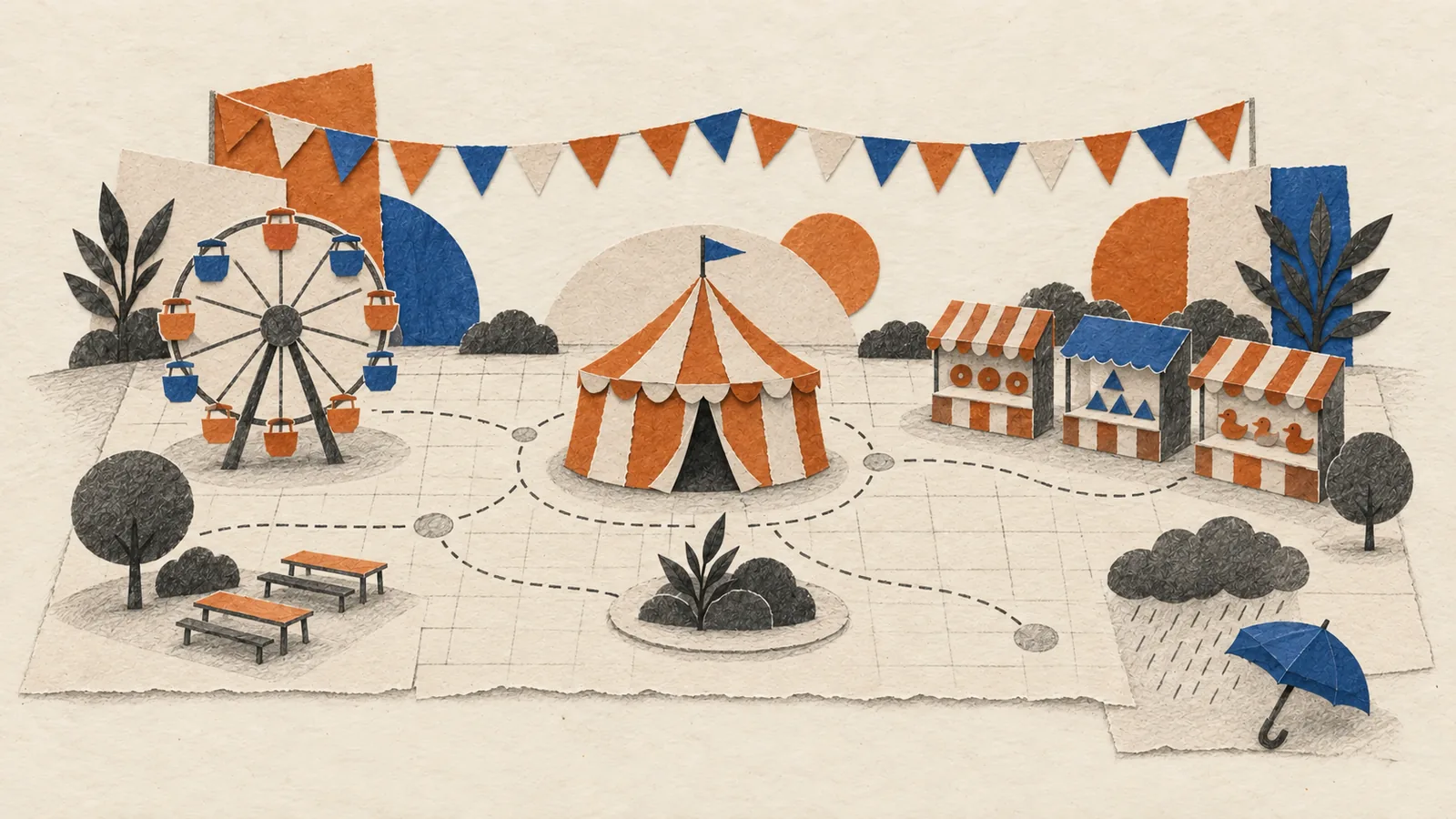
A well-designed family day typically has 3–4 distinct zones: a high-energy activity area (inflatables, obstacle course), a calmer creative zone (craft, face painting), a games zone (carnival stalls, sports), and a rest/food zone.
Do not try to make every zone appeal equally to every age group. That often leads to generic experiences. It is better to intentionally plan some activities for toddlers, some for primary-school kids, and a few that adults will genuinely join.
Week 7: Lock headline attractions and vendor direction
By this stage, decide the one or two main attractions that will make the event feel substantial. This could be a giant inflatable park, a mini Amazing Race, a stage game block, mascot appearances, or a themed carnival line-up.
Once those are decided, the rest of your vendors become easier to sequence:
- Activity / inflatable vendors
- Catering / food booths
- AV / sound
- Stage / tentage if needed
- Emcee / facilitators
- Photographer / videographer
Week 6: Sort food, welfare and movement flow
Food planning for family days is not just about menu. It affects queueing, seating, traffic flow and overall pacing. If everyone needs to line up at one buffet line while inflatables are operating beside it, congestion becomes the real problem.
Check:
- Number of serving points
- Shade / seating nearby
- Kids-friendly menu items
- Water access
- Halal / dietary requirements
- Whether snacks should run throughout instead of one heavy meal block
Week 5: Entertainment and programme structure
Decide your emcee or MC requirement. For family days with 150+ pax, a professional emcee who can engage kids is worth the investment. This is not the same skill set as a corporate event MC. If you need help on scripts, games and stage flow, use our family day emcee Singapore guide before you lock the run of show.
Map out the basic programme structure:
- Arrival / registration
- Opening / welcome
- Free-play activity window
- Group activities / games
- Lucky draw or prize distribution
- Meal timing
- Closing / photo opportunities
Do not over-programme. A family day should still feel loose enough for parents to move at their own pace.
Week 4: Confirm manpower and on-day roles
This is where many internal committees get caught. Family day events look casual, but operationally they need more staff eyes than a standard indoor corporate event.
You may need:
- Registration crew
- Activity marshals
- Queue control support
- Wristband / child tagging support
- Floaters for troubleshooting
- Prize / inventory control
If you are doing inflatables, carnival games and food stations at once, under-staffing becomes obvious very quickly.
Week 3: Confirm attendee comms and family info
Start collecting RSVPs with enough detail to make the event manageable:
- Number of adults
- Number of children
- Child age bands
- Dietary needs
- Transport questions
Also send practical info early: parking, attire, stroller-friendliness, start/end time, what is sheltered, and whether guests should expect outdoor movement.
Week 2: Finalise layouts, wet weather and safety notes
Now turn the event into a site plan, not just a vendor list. Place each activity and food point on an actual layout. Ask where queues will form, where parents will wait, where power runs, where bags pile up, and what happens if a sudden rain band appears.
Families notice poor movement faster than decor gaps.
If you want a page-level control list for supervision, queue lanes, first aid, weather calls, and live escalation, use our family day safety checklist Singapore before final sign-off.
Week 1: Confirm all supplier cues and print items
Hold a final run-through with the organiser or internal lead. Confirm:
- Supplier arrival times
- AV cue timing
- Prize staging
- Emergency contact list
- Signage / wayfinding
- Rain call timing
If there is an emcee, make sure the final programme and key names are briefed in writing, not verbally on the day.
Common Family Day Planning Mistakes
- Overloading the programme: too many forced stage moments, not enough free movement
- Planning for “average guests”: instead of accounting for toddlers, older kids, and parents differently
- Ignoring queues: one food line or one prize collection point can ruin flow
- Underestimating manpower: especially for inflatables and mixed-use spaces
- No wet-weather fallback: outdoor family days need a real Plan B
Frequently Asked Questions
How early should I start planning a corporate family day in Singapore?
For 100+ pax events, 8–10 weeks is a good baseline. For 300+ pax or premium venues, start 3–6 months ahead.
What activities work best for mixed-age family days?
Inflatables, carnival stalls, food stations, stage games, face painting and low-barrier team challenges usually work best because families can join at different levels.
How do I avoid long queues at a family day?
Use multiple food points, stagger activity anchors, separate toddler-friendly and older-kid zones, and avoid releasing the whole crowd to one station at once.
Do I need a professional organiser?
For smaller internal gatherings, not always. But once you add multiple vendors, inflatables, family welfare and weather planning, a specialist organiser becomes valuable fast.
Need Help Planning the Day?
Get Out! Events® runs family days across Singapore — from 50-person office picnics to 600-pax multi-zone family carnivals. Felix and Stacy are involved in every programme. Let’s talk.