Corporate Roundtable Events Singapore
Planning a leadership discussion, client forum, or peer-learning session in Singapore? A corporate roundtable event works best when the goal is conversation, not passive listening. Instead of rows facing a stage, the format is built around moderated discussion, a balanced delegate mix, and a room setup that makes it easy for everyone to contribute.
This guide explains when a roundtable format fits, how to structure the agenda, what seating and AV setup to use, and how to decide whether a roundtable is better than a seminar, panel, or workshop. If you need a broader overview of formats, start with our main corporate events Singapore guide.
What Is a Corporate Roundtable Event?
A corporate roundtable is a facilitated discussion for a curated group of participants, usually between 8 and 40 pax depending on whether you run one table or several breakout tables. The value comes from exchange: attendees share perspectives, compare challenges, and leave with practical takeaways rather than just presentation slides.
In Singapore, roundtables are commonly used for:
- Executive breakfast discussions with clients or prospects
- Industry peer-learning sessions for HR, finance, legal, or technology leaders
- Internal leadership alignment sessions before a larger company event
- Partner or stakeholder dialogues where discussion quality matters more than crowd size
When a Roundtable Format Fits Best
A roundtable is usually the right choice when you want depth over scale. If the success metric is strong discussion, shared insight, and relationship building, the format performs better than a lecture-style session.
| Format Goal | Roundtable Fits If | Choose Another Format If |
|---|---|---|
| Thought leadership | You want discussion between peers, not a one-way keynote | You need to address a large audience at once |
| Client engagement | You want senior guests talking to each other in a controlled setting | You need open lead generation at scale |
| Internal alignment | You need honest input from decision-makers across teams | You only need to cascade information |
| Problem-solving | You want participants comparing cases and solutions | You need formal training with hands-on exercises |
If you are still deciding between discussion-based and presentation-led formats, read our guide on conferences vs seminars vs workshops. A roundtable usually sits closest to a facilitated workshop, but with less instruction and more peer exchange.
Recommended Agenda Structure for a Corporate Roundtable
The most common mistake is overloading the agenda with too many speakers or too many sub-topics. A strong roundtable agenda keeps the structure tight so the facilitator has room to guide the conversation.
For a 90-minute roundtable
- 10 min: Arrival, seating, brief networking
- 10 min: Welcome, objective, house rules, participant introductions
- 20 min: Framing remarks or one short stimulus presentation
- 35 min: Moderated discussion with prepared prompts
- 10 min: Final takeaways from each participant
- 5 min: Close and next steps
For a 2-hour roundtable
- 15 min: Arrival and informal networking
- 10 min: Opening remarks and context
- 20 min: Short case study, fireside prompt, or market update
- 50 min: Facilitated discussion across 3-4 themes
- 15 min: Synthesis, action points, and closing comments
- 10 min: Post-session mingling or media-free networking
Keep formal presentations short. Once slides take over the room, the event starts behaving like a seminar instead of a roundtable.
Seating Design: How to Set Up the Room
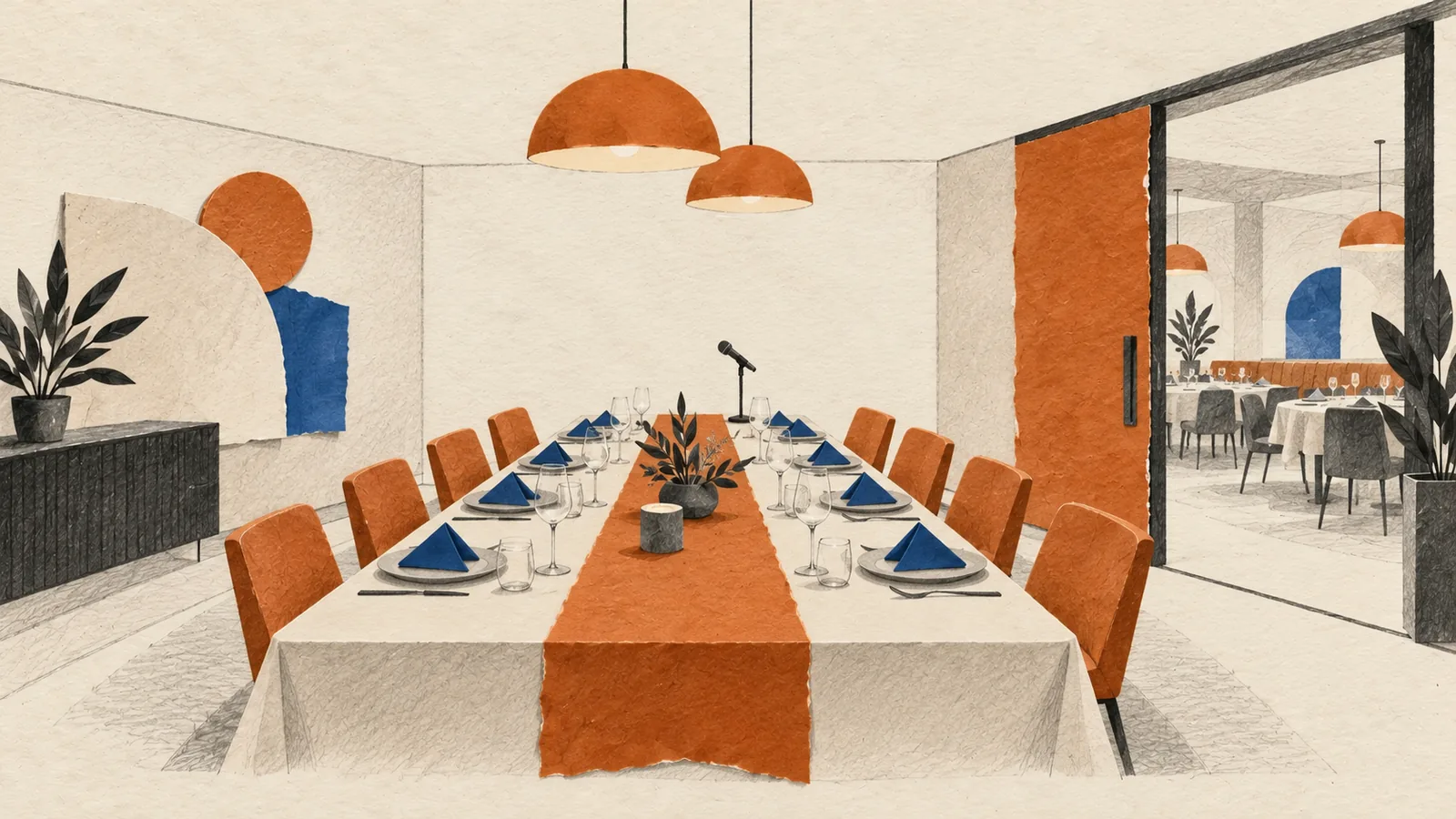
Seating affects participation more than most organisers expect. The goal is clear sightlines, equal status, and easy turn-taking. In most Singapore venues, the best layouts are:
| Setup | Best For | Watch-Out |
|---|---|---|
| Single round table | 8-12 pax senior discussion | Hard to scale once the guest list grows |
| Hollow square | 12-20 pax with facilitator movement space | Can feel formal if the room is too large |
| Multiple cabaret tables | 24-40 pax with breakout prompts | Needs strong moderation to avoid fragmented discussion |
| Boardroom style | Internal leadership sessions with note-taking | Can feel hierarchical if seating order is sensitive |
For invite-only client roundtables, avoid theatre seating and avoid placing one brand host at the “front” of the room unless you intentionally want a presenter-led dynamic. A true roundtable should feel shared, not stage-managed.
Moderator Flow and Facilitation Rules
The facilitator is the difference between a lively roundtable and a polite but flat conversation. Their role is not to dominate the room. It is to control pace, draw out quieter delegates, and keep stronger personalities from taking over.
A practical facilitation flow looks like this:
- Open with one clear objective and one sentence on why this group is in the room.
- Set rules early: concise answers, one speaker at a time, Chatham House Rule if relevant.
- Use prepared prompts that move from broad context to practical examples.
- Invite quieter participants in before opening the floor again.
- Summarise transitions so the room knows what insight has been captured.
- Close with a final takeaway round instead of ending abruptly.
If your internal team does not have a confident moderator, appoint an external facilitator. This matters even more when the audience includes clients, regulators, association leaders, or cross-functional senior stakeholders.
AV and Production Checklist for Singapore Roundtables
Roundtables need less production than a conference, but the AV still has to support conversation. In hotel boardrooms and private dining rooms across Singapore, the usual requirements are:
- Wireless microphones for larger tables or multi-table rooms where natural acoustics are weak
- One confidence screen or side screen if you need a short framing deck
- Discreet room audio rather than conference-style loud playback
- Recording only if necessary because many executive roundtables work better off the record
- Name cards and table plan to support the delegate mix you want
- On-site cueing for host remarks, meal service, and session timing
Venue choice also matters. If you need help comparing venue layouts, privacy, and AV suitability, review our shortlist of best corporate event venues in Singapore before locking the room.
How to Curate the Right Delegate Mix
A roundtable is not just a smaller event. It is a curated room. Too many attendees from the same company, too many junior participants, or too many people with conflicting objectives can flatten the discussion.
A practical delegate mix usually includes:
- One clear audience tier, such as CHROs, finance heads, legal counsel, or operations leaders
- A balance between host representation and external guests
- Enough diversity of perspective to create discussion, without losing topic relevance
- A final guest list small enough that every attendee can contribute meaningfully
As a rule of thumb, 10-14 high-fit delegates often outperform a room of 30 loosely matched invitees. Quality of conversation is the product.
Common Roundtable Planning Mistakes
- Too many speakers. Three presenters in a 90-minute roundtable leaves almost no room for discussion.
- Weak moderation. Senior guests will disengage if the conversation drifts or repeats.
- Unclear delegate criteria. Mixed-seniority rooms often create polite but shallow discussion.
- Overbuilt AV. A roundtable should feel intimate, not like a mini-conference.
- No follow-up plan. If this is a lead-nurture or stakeholder event, define the next action before the event starts.
Should You Run a Roundtable, Seminar, or Workshop?
Choose a roundtable when you want peer discussion. Choose a seminar when one expert or panel needs to educate a larger group. Choose a workshop when the audience needs hands-on work, templates, or breakout exercises. If your team is unsure, our corporate events FAQ Singapore covers common format-planning questions that come up during brief development.
Planning Corporate Roundtable Events in Singapore
Roundtables work because they are intentionally small, tightly moderated, and built around the right people in the room. If you get the agenda, seating, AV, and delegate mix right, the format creates stronger engagement than a generic presentation-led event.
Need help deciding whether a roundtable is the right fit for your brief? Talk to our corporate events team in Singapore and we can recommend the right event structure based on your audience, objectives, and venue constraints.
About the author
Felix Sim
Co-Founder, Get Out! Events
Felix Sim is the Co-Founder of Get Out! Events, a Singapore events agency that plans corporate team building, conferences, gala dinners, family days, and format-specific business events. He writes practical event-planning guides based on hands-on delivery experience in Singapore. Learn more about Get Out! Events.
Facilitate a roundtable so every participant can contribute
Roundtables fail when senior voices dominate or the prompt is too broad. Send one decision question in advance, use a structured first round so everyone speaks and ask a neutral facilitator to surface disagreement without forcing consensus. Close by separating decisions, open questions and experiments, then assign an owner and review date to each action.
For teams that need repeatable discussion skills, scope a corporate training workshop. Use a psychological safety workshop to practise speaking up, facilitated team building to examine group dynamics or a team bonding workshop to strengthen connection. Compare the options in the team building workshop overview.