Who Does What on an Event Day: Event Crew Roles in Singapore
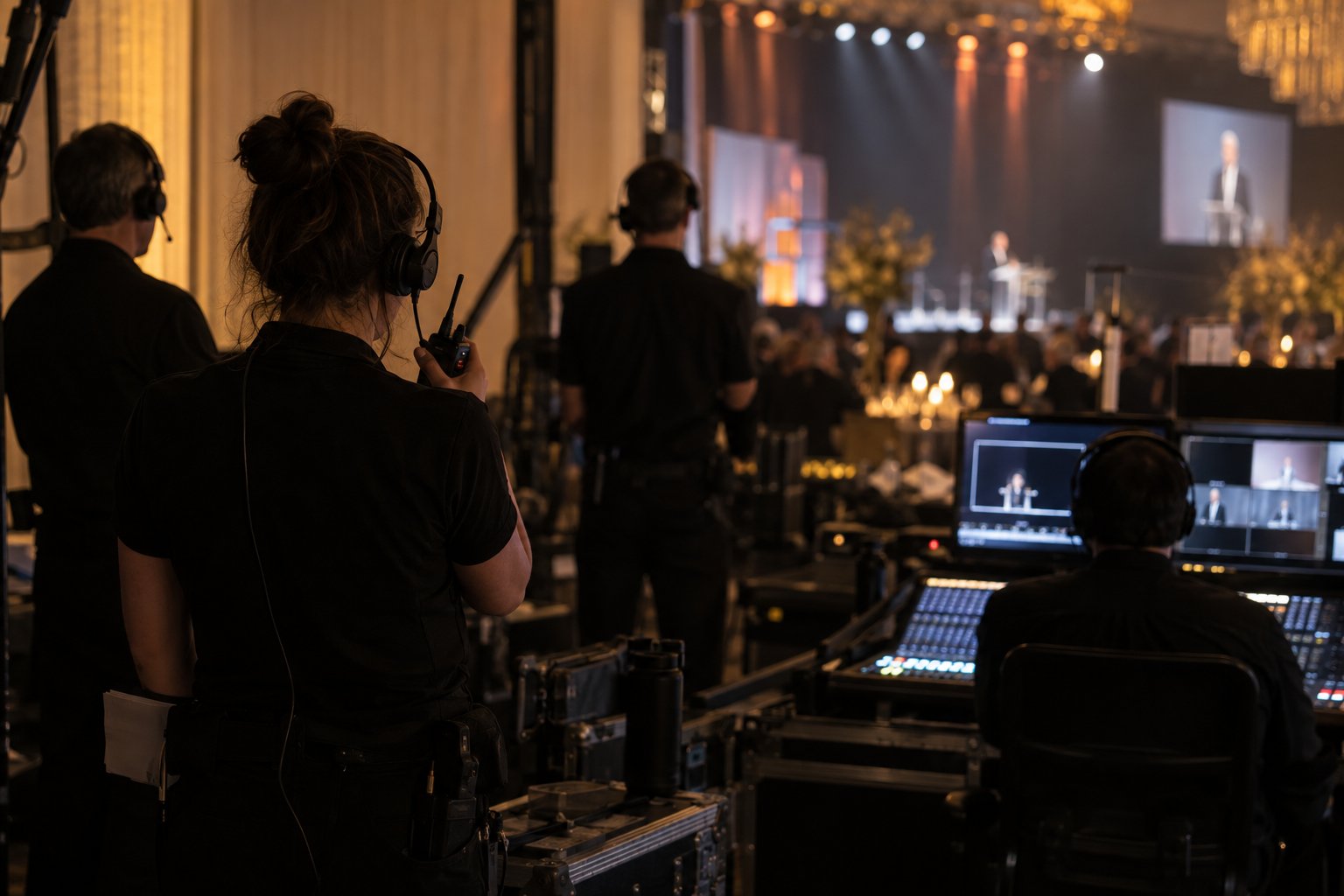
A calm-looking corporate event usually has a dozen people working behind it, each owning one piece of the day. When everyone knows who does what, a late speaker, a dead microphone or a long buffet queue gets solved quietly. When roles are vague, the same problems spread.
This guide sets out the event day roles you will usually find at a Singapore corporate event, what each person is responsible for, how the roles shift across the day, and how many people you typically need.
Why event day roles need to be clear
Most event day problems come from a job that nobody owns. The stage manager assumes the AV team is checking the lapel mics. The AV team assumes the stage manager is. The client lead assumes the venue knows the dinner is running 20 minutes late, but nobody has told the banquet captain.
Clear roles mean every task has one owner, everyone knows who they escalate to, and the client has a single point of contact. A good corporate event run sheet lists the owner beside every cue for exactly this reason.
Who does what on an event day: the core roles
Client lead
The client lead is the person from your organisation who holds the decisions. They approve last-minute changes, confirm who goes on stage, handle VIPs and internal stakeholders, and sign off when something needs a judgement call, such as cutting a segment to protect the dinner timing.
Event manager or project manager
The event manager runs the event from the organiser’s side. On the day, they are the main link between the client lead and the crew, the venue and the suppliers. They track the run sheet, manage the budget for any on-site changes and keep a list of issues to close before the client leaves. If you want a fuller picture of how this role fits into the wider service, see what an events company does.
Producer
The producer owns the show content: the programme flow, the scripts, the stage moments and how they look and sound. At smaller events the event manager often carries this role. At conferences, award nights and large dinner and dances, a separate producer is common.
Stage manager
The stage manager owns everything behind the stage edge. They make sure the next speaker or performer is found, miked, briefed and standing in the right spot at the right time. They manage backstage, the green room, props, awards on trays and the order of walk-ons.
Show caller
The show caller calls the cues live over the headset: lights, sound, video playback, walk-in music, emcee entry. They sit with the technical team, follow the script line by line and do nothing else while the show is running. At smaller events the stage manager or producer may call the show. Larger productions use a dedicated person.
AV or technical director
The technical director leads sound, lighting, screens, LED walls, video playback, microphones and any livestream. They run the technical rehearsal, manage the operators at the control desk and decide on the fix when something fails. For hybrid events they also own the stream and its backup.
Floor managers
Floor managers own the room itself. They handle guest flow, seating, ushering, timing of doors opening, movement between the ballroom and breakout rooms, and the transition from programme to dinner or networking. Large events often have one per zone.
Event crew
Crew are the hands that make the plan happen: setting up backdrops, carrying props, placing table items, running items between rooms, managing games stations at a family day, and packing down afterwards. Brief them on their zone, supervisor and timings.
Emcee
The emcee is the voice of the event. They open and close the programme, introduce speakers, run games or lucky draws, fill gaps when something runs late and keep the energy right for the room. See our guide to choosing a dinner and dance emcee.
Registration team
The registration team owns the first impression. They check guests in, print or hand out name tags, manage walk-ins and VIP arrivals, direct people to the right room and keep the attendance count accurate for the venue and F&B. See our conference registration checklist for setup details.
F&B coordinator
The F&B coordinator is the link between the event and the venue’s banquet team. They confirm final numbers, dietary meals, halal and vegetarian tables, the timing of each course, coffee breaks and buffet opening. When the programme runs long, this is the person who tells the kitchen to hold, so food is not left sitting out.
Safety officer and first aid
Someone must own safety. This covers the emergency plan, evacuation routes, crowd control, weather calls for outdoor events and first aid. For active formats such as family days, sports days and team building, a trained first aider on site is standard practice, and some venues or activities may require more. See our family day safety checklist.
Photographer and videographer
The photographer captures the moments your organisation will use afterwards: speeches, award presentations, group shots, candid networking and sponsor visibility. Give them a shot list and a client contact who can point out key people. A videographer may also be on site for a highlight reel or a full recording.
Event crew roles by time of day
Roles are not static. The same person may be busiest at 7am and nearly idle by 9pm. This table shows a typical full-day corporate event with a morning setup, an afternoon programme and an evening dinner.
| Time of day | Who leads | What is happening |
|---|---|---|
| Early morning: load-in and setup | Event manager, technical director, crew | Venue access, stage and AV build, backdrops, signage, table setup, power and safety checks. |
| Late morning: technical rehearsal | Technical director, show caller, stage manager, emcee | Sound check, slides and video tested, cue run, walk-on positions, mic checks for speakers who are available. |
| Before doors open | Event manager, client lead, floor managers | Final walkthrough, crew briefing, confirm guest numbers with F&B, VIP arrival plan agreed. |
| Guest arrival | Registration lead, floor managers, photographer | Check-in, name tags, ushering, VIP reception, arrival photos, managing queues. |
| Programme or show | Show caller, stage manager, emcee, technical director | Speeches, presentations, performances, awards, games. Cues called live, presenters staged on time. |
| Meals and breaks | F&B coordinator, floor managers | Course timing, buffet flow, dietary meals delivered, hold or release kitchen as the programme moves. |
| Closing and departure | Emcee, floor managers, event manager | Closing remarks, lucky draws, group photos, guest exit, transport if arranged. |
| Teardown | Event manager, technical director, crew | Pack down, supplier collection, venue handback, lost and found, issue log closed. |
How many people do you need? A staffing ratio guide
There is no fixed formula. The right number depends on the format, the venue layout, how many rooms are in use, whether there is a stage show and how much the guests need to move around. The ranges below are typical starting points, not rules.
| Event type | Typical core team | What changes the number |
|---|---|---|
| Small seminar or meeting, under 80 guests | One event manager, one or two crew, registration covered by crew, venue AV technician | Hybrid streaming, VIP guests or multiple rooms usually add people. |
| Dinner and dance, 200 to 500 guests | Event manager, stage manager, show caller or producer, technical team, emcee, two to four floor and registration crew, photographer | Performances, awards, games and multiple entrances push numbers up. |
| Conference, 300 guests or more | Event manager, producer, show caller, stage manager, technical director, registration team, one floor manager per room, F&B coordinator | Breakout tracks, exhibitors, sponsors and livestreams each need their own owner. |
| Family day or outdoor event | Event manager, floor managers by zone, station crew, emcee, safety lead with first aid, photographer | Number of game stations, children’s activities, weather plans and site size. |
A useful check: for every key moment in the run sheet, can you name one person who owns it and one person they report to? If two moments happen at the same time and the same name owns both, you probably need another person.
Which roles can be combined at a smaller event?
- Usually fine to combine: event manager and producer, stage manager and show caller for a simple programme, registration and floor crew once arrivals are done, F&B coordinator and event manager for a single-room event.
- Risky to combine: show caller and technical director, because the person calling cues will leave their seat to fix a fault. Client lead and event manager, because the client should be with guests, not managing suppliers. Safety lead and a busy crew role, because the person responsible for safety must be free to act.
The rule of thumb is simple. Combine roles that peak at different times. Separate roles that peak at the same time.
Communication on the day
Most crews use radios or headsets, with separate technical and floor channels. The escalation path is simple: crew go to their floor manager, floor managers go to the event manager, and the event manager goes to the client lead for decisions that change the programme or the cost.
Run a crew briefing before doors open covering VIPs, exits, the first aid point and who to call for what. For multi-day or multi-room events, our conference on-site management checklist covers escalation and show-day control in more detail.
What to ask your event company about the day-of team
When you compare event companies, ask for the manpower plan, not just a headcount. Useful questions include:
- Who calls the show, and is that person also running AV?
- Who speaks to the venue about F&B timing?
- Who owns safety and first aid, and what is the plan for wet weather or an evacuation?
If the answers are vague, the roles on the day will be too. You can see how we approach this on our event management in Singapore page.
Event day roles FAQ
Who does what on an event day?
The client lead makes decisions, the event manager runs the event and suppliers, the producer owns the show content, the stage manager handles backstage and presenters, the show caller calls live cues, the technical director runs AV, floor managers handle the room, crew carry out setup and tasks, the emcee hosts, registration checks guests in, the F&B coordinator manages the venue kitchen, a safety lead covers first aid and emergencies, and the photographer captures the day.
What is the difference between a stage manager and a show caller?
The stage manager owns backstage: presenters, props, walk-ons and the order of people going on stage. The show caller sits with the technical team and calls each lighting, sound and video cue live. At smaller events one person can do both, but at larger shows they are usually separate so neither job slips.
How many crew do I need for a corporate event in Singapore?
It varies with the guest count, format, number of rooms and how much is happening on stage. A small seminar may need only a few people, while a large dinner and dance or conference typically needs a dedicated team for stage, AV, registration, floor and F&B. The best test is whether every key moment in the run sheet has one named owner.
Does the client need someone on site on the event day?
Yes. Even with a full event company team, someone from your organisation should be available to approve changes, handle VIPs and internal stakeholders, and make calls on programme timing. That person should be free to host, not tied up with logistics.
Do I need a first aider at a corporate event?
For active formats such as family days, sports days, outdoor events and team building, having a trained first aider on site is standard practice. For seated events, check the venue’s own arrangements and make sure someone on your team owns the emergency plan. Requirements can vary by venue and activity.
Can one person be both event manager and producer?
At smaller events, often yes. As the programme gets more complex, with performances, awards, video content or livestreams, splitting the roles helps. The producer can protect the show while the event manager handles guests, suppliers and the venue.
Plan your event day team with Get Out! Events
Get Out! Events plans and runs corporate events across Singapore, from dinner and dances and conferences to family days and team building. We build the manpower plan around your run sheet, so every key moment has a named owner and you have one clear contact on the day. Tell us about your event and we will recommend the team it actually needs. Contact Get Out! Events to start planning.