Private Event Venue Singapore: How to Choose Exclusive Use, Rooms and Buyouts
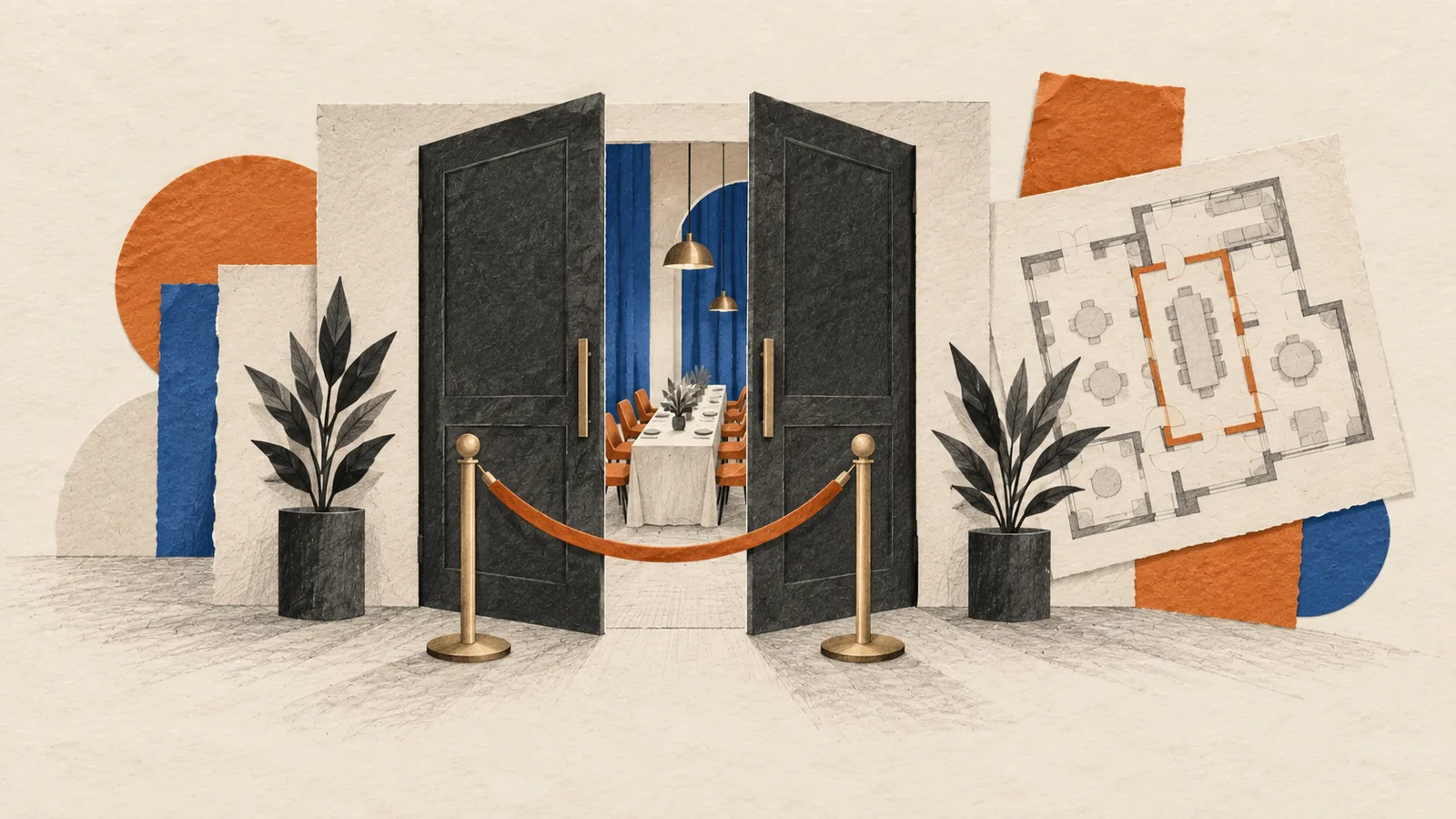
A private event venue in Singapore is a space your group can use on its own, either the whole venue or a closed-off room. To choose well, decide how private the event needs to be, check what exclusive use really covers, and confirm drinks, entertainment and photo consent before you sign. This guide shows you how.
It is written for HR, admin and marketing teams planning company dinners, client nights, launches and celebrations. It is general information, not legal advice. For our wider checklist on booking any venue, read event venue for rent in Singapore. If you would like help with the whole event, ask us for a proposal.
What counts as a private event venue
Venues use the word private in different ways. Before you compare quotes, check which of these you are being offered:
- Full buyout. Your group has the whole venue. No walk-in guests, no other bookings.
- Private room. A room with its own walls and door inside a larger venue, such as a hotel or restaurant.
- Semi-private area. A section of a shared space, often marked off with screens, plants or furniture.
- Dedicated event space. A space built only for hire, which is private by default when you book it.
Venues often offer more than one option. For example, the HOME event space at Clarke Quay states on its venue page that semi-private bookings are available if you only need partial venue access. It also says that full venue rental provides exclusive access to the entire space, bar, and technical equipment.
That difference matters. With a semi-private booking, other guests may share the toilets, the entrance and the noise. With a full buyout, you control the room, the music and the guest list.
How private does your event need to be?
Start with the reason you want privacy. The answer tells you which booking type to ask for and how much to spend on it.
- Confidential content. Results briefings, product reveals and leadership offsites need closed doors and no outside guests. Ask for a full buyout or a room with solid walls.
- VIP or client guests. Client dinners need quiet, a clear arrival point and staff who serve only your table.
- Celebrations. Company parties need room to make noise. A shared space may limit music and speeches.
- Branding. Launches need control over signage, lighting and photos. Only exclusive use gives you a clean backdrop.
Write your answer into one line of the brief, such as “full buyout, no other guests, 6pm to 11pm”. Send the same line to every venue so the quotes are like for like. Our venue comparison template helps you score them side by side.
Questions to ask about exclusive use
Exclusive use can mean less than you expect. Ask each venue these questions and get the answers in writing:
- Which areas are mine? Ask for a floor plan with your space marked, including entrances, toilets, the bar and any outdoor area.
- Will anyone else be on site? Check for other events, walk-in diners or staff training during your booking.
- What are the exact hours? Confirm when you can get in to set up and when you must be out.
- What is included? List furniture, AV, staff, cleaning and security. Note anything that costs extra.
- What are the house rules? Ask about music volume, decor, open flames, confetti and outside suppliers.
- What happens if numbers change? Check the minimum guest number, the deadline for final numbers and the cancellation terms.
Set-up time is easy to forget. HOME, for example, notes that setup time can be arranged in advance to accommodate decorations, balloon arrangements, or technical rehearsals. Do not assume this is free or included. Ask how set-up hours are charged at every venue.
Always visit before you sign. A site visit shows you the sightlines, the noise from next door and the route from the lift to the room. Use our event site visit checklist so you do not miss anything.
Drinks, entertainment and licences
A private event is not automatically outside the rules. Two areas need checking early: drinks and entertainment.
Liquor. The Singapore Police Force liquor licence FAQ says you need a liquor licence if you want to supply (sell, barter, exchange, serve, or deliver) any liquor in Singapore. In most cases the venue or caterer serves drinks under its own licence. If you plan to bring in an outside bar, ask who holds the licence and whether it covers your venue and hours.
If a temporary licence is needed, the FAQ lists a Class 5 temporary licence (maximum 30 days). The SPF liquor licence page gives processing time as approximately three weeks from the receipt of the application. Build that into your timeline.
Entertainment. Bands, DJs, magic shows and games can count as public entertainment. The SPF public entertainment licence FAQ describes licensable activities in places accessible to the public. It also lists exemptions, including meetings of companies, trade unions, political associations (members only).
The SPF licence overview adds that certain events or activities are exempted from a Public Entertainment licence if conditions are met. Some exempted events require the organiser to notify the Police at least 7 days before the event/activity may be carried out. SPF also notes that the frameworks for the Public Entertainment licence and Liquor licence are governed by separate rules and regulations, so check each one.
The simplest step is to run your plan through the GoBusiness e-Adviser for Events. It helps you understand which licences and permits you need. Ask the venue too. Many have run similar events and know their own licence conditions.
Fire safety, parks and unusual spaces
Some private events take place in spaces that are not normally used for events. A warehouse, a showroom or an empty floor can feel exclusive, but it brings extra checks.
The SCDF temporary change of use page says a permit is not needed for events held within building areas that already possess a fire safety certificate (FSC) for such activities, including multi-purpose halls, exhibition halls, auditoriums, concert halls, and theatres. For other spaces, ask the venue owner whether a temporary change of use permit applies, and who will apply for it.
Outdoor private events in public parks also need planning. NParks says on its event venue booking page that you must book if your event has more than 15 participants or requires set-up such as a tentage or a sound system. Bookings must be submitted at least one calendar month before the commencement of the event.
Guest privacy and photos
Private events often have a guest list that you must protect. Keep the list to the people who need it, such as reception staff and security. Our guide to corporate party guest list management covers check-in and data handling.
Photos need care too. The PDPC Advisory Guidelines on the PDPA for Selected Topics give examples for a private function. These include clearly stating in its invitation to clients that photographs of attendees will be taken at the function. Another is putting up an obvious notice at the reception or entrance of the function venue to inform attendees that photographs will be taken at the event.
Tell your photographer which guests do not want to be photographed. If you are hiring one, our guide to corporate event photography covers the brief, consent and usage rights.
What drives the cost of a private event venue
We do not publish venue prices here because they change with date, time and package. These are the factors that move a quote up or down:
- Level of privacy. A full buyout usually replaces the revenue the venue would earn from other guests.
- Day and time. Weekend evenings and the year-end season are in higher demand than weekday lunches.
- Hours on site. Set-up, rehearsal and teardown time all count, not only the event itself.
- Food and drink. Minimum spends, per-head packages and free-flow drinks change the total quickly.
- Technical needs. Sound, lighting, screens and a technician on duty may be extra.
- Decor and suppliers. Some venues charge for outside suppliers or limit what you can bring in.
- Licences and permits. Temporary licences and permits add cost and lead time.
Our guides to corporate event venue pricing and venue negotiation explain how to compare packages and what to ask for.
Common mistakes when booking a private venue
- Assuming private means exclusive. A private room can still share a corridor, toilets and noise with a busy restaurant.
- Booking only the event hours. Without set-up time, your decor and AV go in while guests arrive.
- Forgetting the licence check. Outside bars and live acts raise licence questions that take weeks to resolve.
- Skipping the site visit. Photos online rarely show low ceilings, pillars or sound from next door.
- Leaving consent to the day. Put the photo notice in the invitation, not only at the door.
Frequently asked questions
What is the difference between a private and a semi-private event venue?
A private booking gives your group exclusive use of the whole space, so no other guests share it. A semi-private booking gives you part of a venue, such as a section or a room, while other areas stay open. Ask the venue to show you exactly which areas are yours on a floor plan.
Do we need a liquor licence for drinks at a private event?
SPF says a liquor licence is needed to supply liquor, which includes selling, serving or delivering it, unless an exemption applies. Most venues and caterers serve drinks under their own licence. If an outside bar is involved, confirm who holds the licence before you sign.
Does a private company party need a public entertainment licence?
It depends on the activity and whether the place is accessible to the public. SPF lists meetings of companies for members only among the exemptions, and some exempted events still need police notification at least 7 days ahead. Use the GoBusiness e-Adviser for Events to check your plan.
Can we hold a private event in a public park in Singapore?
Yes, but NParks requires a booking if your event has more than 15 participants, needs set-up such as tentage or a sound system, or sells tickets. Bookings must be submitted at least one calendar month before the event.
What affects the cost of a private event venue?
The main drivers are exclusive versus partial use, the day and time slot, set-up and teardown hours, food and drink format, AV and technical crew, decor rules and any licences or permits. Ask each venue for a written quote against the same brief so you can compare.
Plan your private event with us
If you want a private venue shortlist, a run sheet and one team to manage suppliers on the day, contact Get Out! Events. Send your date, guest numbers and the level of privacy you need, and we will come back with options and a quote.