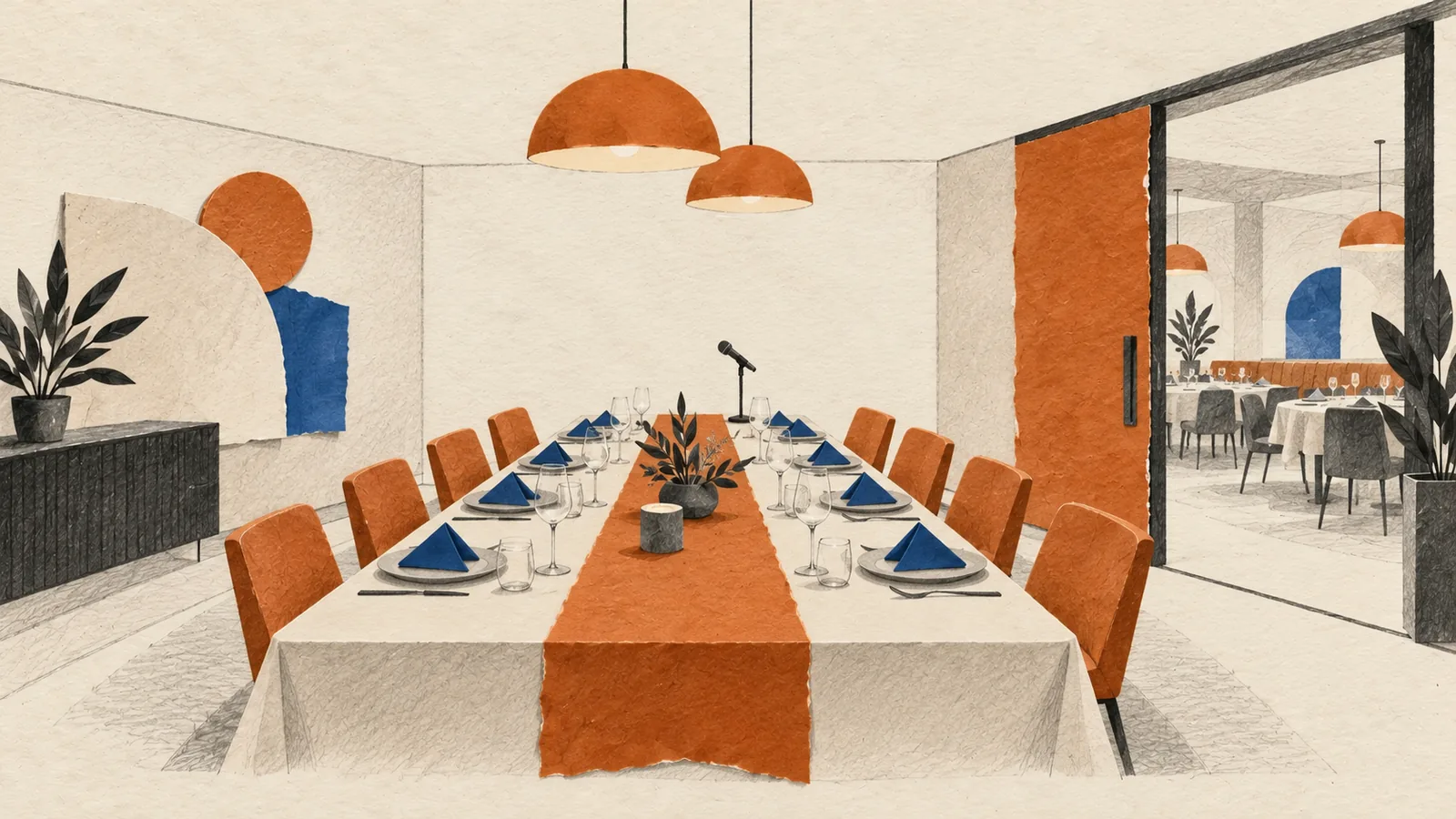
Company Dinner and Dance Venue Checklist Singapore
If your team already knows it is running a company dinner and dance in Singapore, the venue shortlist should not be decided by ballroom photos alone. The real question is whether the room can support your stage layout, dance floor, LED-wall sightlines, banquet flow, loading access, and guest movement once the programme is real.
This checklist is for HR teams, office managers, and event owners comparing venues after the first round of browsing. If you still need broad options, start with our 10 Best Dinner and Dance Venues in Singapore 2026 list and the wider Dinner and Dance Guide Singapore. If the committee still needs internal approval or a cleaner organiser brief, use our Dinner and Dance Proposal Template Singapore. If the run of show is already moving, pair this venue checklist with our Company Dinner and Dance Programme Singapore guide and the Gala Dinner Awards Script Template Singapore.
Use the checks below during site visits, quote review, and final shortlist sign-off. The best venue for a dinner and dance is usually not the one with the flashiest brochure. It is the one that makes the night easier to stage, easier to serve, and easier for guests to move through without friction.
1. Measure the Usable Ballroom, Not Just the Stated Pax Count
A venue can claim it fits 300 or 500 guests and still be wrong for your dinner and dance format. Ask for the usable ballroom footprint after the stage, dance floor, registration desk, photo backdrop, buffet lines, and technical positions are taken out. A room that works for a banquet only can become cramped once awards, entertainment, and guest circulation are added.
- Ask for banquet capacity and cocktail capacity separately.
- Confirm whether the quoted banquet number already assumes a stage and dance floor.
- Check if pillars, low ceilings, or curved walls reduce the clean seating grid.
- Map where registration, sponsor backdrops, or photo moments will sit without blocking the main entrance.
- Ask how the room feels at 80% to 90% of capacity, not only at the absolute maximum.
This is often where shortlist mistakes begin. A venue may look efficient on paper but force guests to squeeze between tables, buffet stations, and a central dance floor once the full layout is installed.
2. Confirm Stage Depth, Ceiling Clearance, and LED-Wall Sightlines
Dinner and dance venues often get evaluated on ambience first, but stage performance is usually what determines whether the night feels polished. Ask for the exact stage dimensions the venue can support comfortably, not just whether a stage is technically possible. Awards nights, band sets, bilingual hosting, and department performances all need different amounts of usable stage depth.
- Confirm the practical stage width and depth after stairs, lectern, confidence monitor, and side access are accounted for.
- Check whether a centre stage or side stage creates cleaner lines for the tables you plan to use.
- Ask if ceiling height or chandeliers restrict truss, moving lights, or LED-wall height.
- Stand in the back rows and test whether a screen or LED wall is visible once guests are seated.
- Check if pillars, decorative features, or balcony edges will cut off sightlines for award recipients and keynote speakers.
If the venue is promoting a large screen or built-in AV package, ask where the image actually sits in relation to the tables. A good-looking ballroom can still fail if half the audience needs to twist sideways to see the awards visuals.
3. Size the Dance Floor Around the Real Programme, Not the Brochure Layout
Many venues can place a dance floor in the middle of the room. Fewer venues can do it without damaging meal service, stage visibility, or the awards sequence. Before approving the shortlist, decide when the dance floor opens, how large it needs to be, and whether it will sit better as a central feature or as a later-night conversion area.
- Ask how many tables must be pushed back or removed if the dance floor needs to be larger.
- Check whether servers can still move food and clear plates when the floor is active.
- Confirm that guests moving to performances, lucky draw, or the bar do not have to cut through the dance floor.
- Look at the floor finish and confirm whether it is suitable for dancing, heels, and temporary covering.
- Ask whether the dance floor position blocks camera angles back toward the stage or LED wall.
If leadership wants a formal awards-first sequence, the room may need to work like a banquet hall for most of the night and only convert into a stronger dance layout near the end. That timing should shape the venue decision early.
4. Walk the Awards, Lucky Draw, and Presenter Movement Step by Step
A company dinner and dance venue should be evaluated against the award flow, not just the dinner setup. Winners need a clean route to the stage. Emcees need space to hold the room. AV operators need clear cue points. Lucky draw moments need guest movement that feels exciting, not chaotic.
- Walk the route from typical guest tables to the stage and check whether it is direct, wide, and camera-friendly.
- Confirm whether there is a holding area for presenters, performers, or winners before they step up.
- Check if the stage has safe stairs on both sides or only one entry point.
- Ask where the emcee, floor manager, and AV team will coordinate handoffs.
- Test whether lucky-draw runners, roaming microphones, and photo coverage can move without fighting service staff.
If your event includes award blocks, nominee slides, or sponsor mentions, the venue has to support timing discipline. Pair this step with your awards script template so the ballroom is assessed against real stage movement instead of generic assumptions.
5. Pressure-Test Banquet Flow, Service Routes, and Menu Logistics
The venue shortlist is not complete until the catering and service pattern make sense. Dinner and dance events lose energy quickly when the kitchen timing clashes with speeches, games, or performances. Ask the venue to explain how service usually flows in that room and what parts of the programme are hardest to run during meal service.
- Confirm whether the package assumes a plated dinner, buffet, or mixed format.
- Ask where buffet lines or service doors sit in relation to the stage and dance floor.
- Check if halal, vegetarian, or special-diet meals can be served cleanly without creating separate guest islands.
- Ask how long each course typically takes at your target headcount.
- Confirm whether speeches, games, or award blocks should happen between courses, after mains, or only after dessert.
Good banquet flow protects the room’s energy. If a venue needs long pauses for service resets, it may still be a fine ballroom for a formal dinner but a weak choice for a high-movement dinner and dance programme.
6. Verify Loading Bay Access, Freight Lift Rules, and Setup Windows
A ballroom can look perfect during a sales presentation and still be painful for production. Before the shortlist is approved, check how equipment, decor, prizes, and staging elements actually get into the room. This matters even more if your concept needs a large LED wall, live band backline, branded entrance tunnel, or heavy lucky-draw items.
- Confirm the loading bay height, vehicle rules, and whether booking is required.
- Ask what time vendors can load in and whether earlier setup incurs extra cost.
- Check the freight lift dimensions and the route from loading bay to ballroom.
- Ask whether there is holding space for cases, props, or spare prizes during the show.
- Confirm teardown timing, especially if the ballroom has a next-morning turnover.
Loading access is one of the fastest ways to separate a brochure-friendly venue from a production-friendly one. If the route is tight, shared, or time-restricted, your event build becomes slower and more expensive before guests even arrive.
7. Check Arrival, Parking, and Guest Movement Beyond the Ballroom
The guest experience starts before the emcee speaks. A venue that is difficult to reach, confusing to enter, or slow to clear can weaken the night even if the ballroom itself is strong. During a site visit, walk the route from drop-off to registration to the dining room and back out again at the end of the event.
- Check if drop-off points, parking, and MRT access match your guest profile.
- Confirm whether there is enough pre-function space for reception drinks, registration, or a queue to form without blocking other users.
- Ask where smokers, VIP holding, and restroom traffic will go during the event.
- Check whether elderly guests, award winners, or wheelchair users can reach the stage comfortably.
- Confirm wet-weather options if any part of the guest route is outdoors.
This matters most when the venue is part of a hotel, mall, resort, or mixed-use building where multiple events can overlap. Guest movement outside the ballroom affects how calm or congested the night feels.
8. Questions to Settle Before You Approve the Shortlist
Before the venue goes to management or procurement for sign-off, make sure the sales team or venue coordinator can answer these clearly:
- What is the real banquet capacity once stage, dance floor, LED wall, and photo area are included?
- Which room layout works best for awards, performances, and a later-night dance floor?
- What AV, screen, staging, and lighting items are included, and what still needs outside production?
- Where do service staff move during speeches, games, and lucky draw?
- What are the loading bay, freight lift, and teardown restrictions?
- What are the extra costs tied to overtime, early access, menu upgrades, or room resets?
If the venue answers these with vague assumptions, the shortlist is not ready. A venue deserves approval only when the room, service model, and production path all support the event you are actually planning.
The strongest company dinner and dance venue is rarely the one with the biggest chandelier. It is the venue that lets your stage, banquet flow, dance floor, award sequence, and logistics run with the fewest compromises. If you need end-to-end help after the shortlist stage, see our Dinner and Dance Singapore service page for full planning, production, entertainment, and event-day support.
Comparing providers? See how RBTHOL and Get Out! Events compare for a company D&D.