
Corporate Event Restaurants in Singapore: How to Choose and Book One
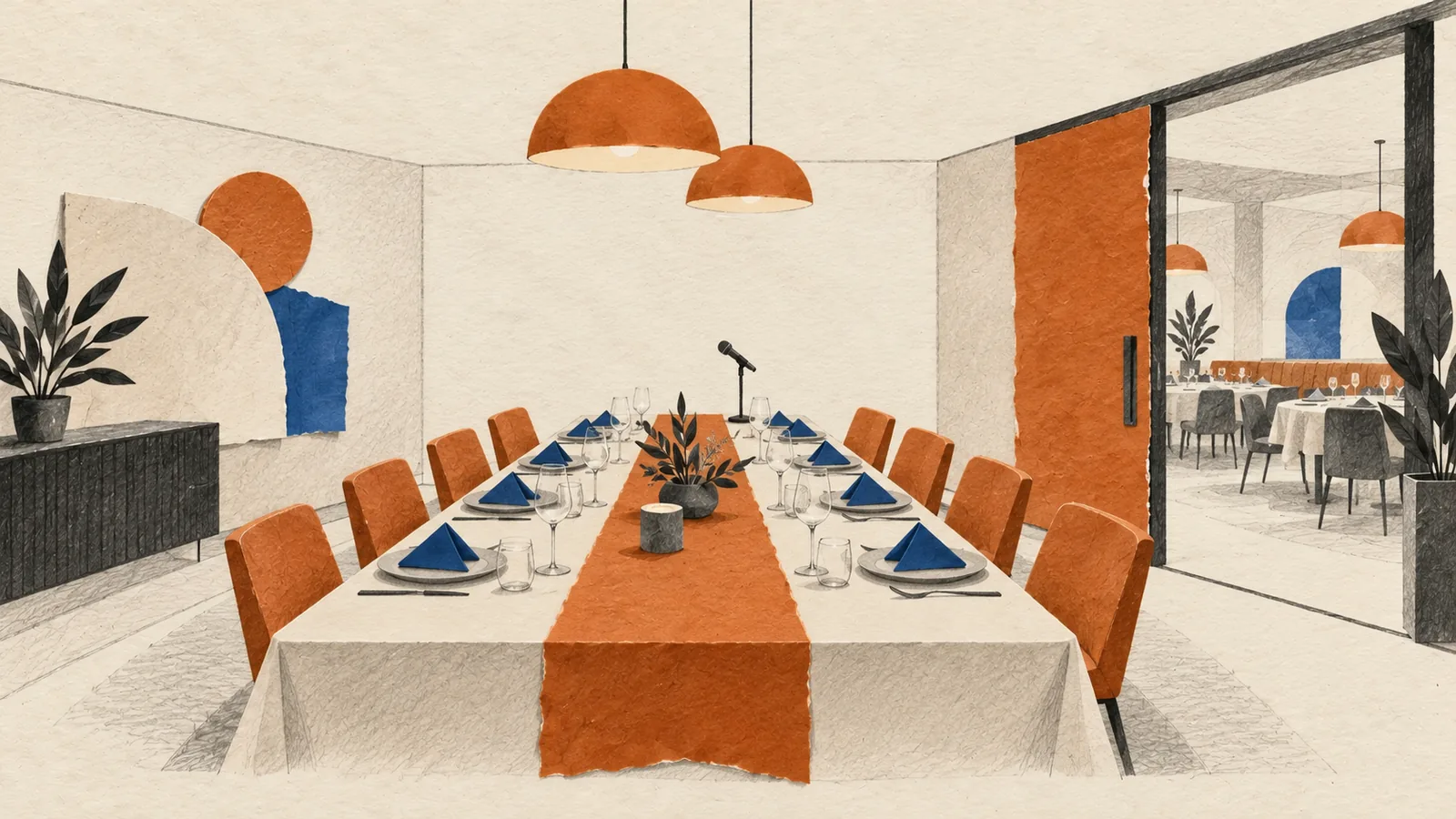
To choose good corporate event restaurants in Singapore, start with what the event must do, not the cuisine. Decide whether you need a private room or a full buyout, then compare restaurants on minimum spend, the final bill after service charge and GST, dietary coverage, sound and AV, and how well the room fits your programme.
This guide is for HR, admin and office teams booking a client dinner, a team celebration, a small awards night or a year-end meal at a restaurant rather than a hotel ballroom. It is general information, not legal or tax advice. If you would like help with the whole event, ask us for a proposal.
When a restaurant is the right venue for a corporate event
A restaurant works well when the food and the conversation are the main event. Guests sit down quickly, the kitchen is already set up, and there is less to build or dismantle than in a blank function room.
Restaurants usually suit these formats:
- Client appreciation dinners. A quiet room, good service and a menu that reflects your brand.
- Team celebrations. Project wins, farewells and small year-end meals where speeches are short.
- Leadership and board dinners. Small groups who need privacy more than a stage.
- Department dinners. Groups that want a relaxed evening without a full production.
A restaurant is a weaker fit when you need a large stage, a full lighting rig, a long awards programme or several hundred guests in one sightline. In those cases, read our corporate dinner planning guide and compare hotel and function venues as well.
Private room, semi-private area or full buyout
This is the first decision because it shapes cost, noise and what you are allowed to do. Ask every restaurant which of these options it offers for your date and headcount.
- Private room. A closed room inside the restaurant. Good for small groups, client dinners and confidential conversations. Speeches are possible, but amplified sound may be limited.
- Semi-private area. A section screened off from the main floor. Cheaper and more flexible, but other diners can hear you and you can hear them.
- Full buyout. The whole restaurant is closed to the public for your group. Needed when you want a microphone, entertainment, branding, a photo wall or your own arrival flow.
If privacy is the main reason for the event, our guide to private event venues in Singapore explains how to confirm exclusive use in writing.
Understand minimum spend before you compare menus
Most restaurants price private rooms and buyouts through a minimum spend rather than a separate room fee. The restaurant expects your group to spend at least that amount on food and drinks. If the bill falls short, you may still pay the difference.
Ask these questions before you compare restaurants:
- Does the minimum spend include drinks, or only food?
- Does it include service charge and GST, or are those added on top?
- Does it change by day of the week, or for lunch and dinner?
- Is there a separate room fee, buyout fee or set-up charge?
- What deposit is needed, and what happens to it if headcount drops?
- When must the final headcount be confirmed?
Put the answers in one table so you can compare like with like. Our venue comparison template has columns you can adapt for restaurants.
Compare the final bill, including service charge and GST
Menu prices in restaurants are often shown before service charge and GST. IRAS notes that food and beverage businesses often add a service charge, typically at 10%. It also states that the service charge is subject to GST because it is part of the total price.
That means GST is calculated on the total including service charge. When you compare quotes, ask each restaurant for the final amount payable per head and in total. Two menus that look similar can end up with different final bills once these items, drinks and extras are added.
For a wider view of what moves venue cost, see our guide to corporate event venue pricing in Singapore.
Plan dietary needs early
Restaurants have a fixed kitchen and a fixed menu style. That is a strength for flavour and a risk for mixed groups. Collect dietary needs when guests register, then send the list to the restaurant before the menu is confirmed.
- Halal. MUIS provides halal certification services and regulates Singapore’s halal industry. It also offers a search for halal-certified eating establishments. Check the specific outlet, not just the brand, before you book.
- Allergies. SFA lists eggs, milk, peanuts, fish and shellfish among foods that cause allergic reactions. It also notes that seafood allergy is one of the most common in Asia. Ask how the kitchen avoids cross-contact and how dishes will be identified at the table.
- Vegetarian and other needs. Ask for a matching course for every course, not a single substitute dish served all night.
If your group prefers Chinese cuisine, our guide to corporate event venues with Chinese food shows how banquet format changes the room you need.
Check sound, AV and the programme
Many restaurants are built for conversation, not presentations. Before you book, walk through your programme with the manager and ask what the room can support.
- Is there a microphone and speaker, or will you need to hire one?
- Is there a screen or TV for a short video or slides?
- Can guests at the back see and hear the speaker?
- Will background music be switched off for speeches?
- Can you bring in a performer, a photographer or a photo backdrop?
- Are there noise limits or a fixed closing time?
Keep the programme short. A welcome, one or two short speeches and a toast fit most restaurant dinners. Longer programmes usually work better in a function room with proper AV.
Licences and music to check for larger restaurant events
For most private corporate dinners in a licensed restaurant, the restaurant already handles its own food and liquor licences. Things change when you add entertainment or open the event to the public.
The Singapore Police Force explains that certain events or activities are exempted from a Public Entertainment licence if a stipulated set of conditions is met. Some exempted activities still require the organiser to notify the Police at least 7 days before the event. If you plan performances or ticketed entry, ask the restaurant and your event partner to confirm what applies.
If you plan to play recorded or live music, note that the COMPASS music users FAQ covers any indoor or outdoor events including private company functions and closed-door events. Confirm with the restaurant whether its existing licence covers your event or whether you need your own.
Common mistakes when booking a restaurant for a corporate event
- Choosing on cuisine alone. A great menu in a room that cannot fit your programme will disappoint.
- Comparing menu prices, not final bills. Service charge, GST, drinks and corkage can change the ranking.
- Booking a semi-private area for speeches. Other diners and kitchen noise will compete with your speaker.
- Leaving dietary needs to the night. Late requests often mean one substitute dish for every course.
- Not confirming headcount terms. A drop in guests can still leave you paying the full minimum spend.
- Skipping a site visit. Visit at the same time of day as your event to check light, noise and access.
A short checklist for restaurant shortlisting
- Write a one-page brief with date, headcount, budget, programme and dietary needs.
- Decide whether you need a private room, semi-private area or full buyout.
- Ask three to five restaurants for written quotes against the same brief.
- Compare minimum spend, final amount payable, deposit and headcount terms.
- Confirm dietary coverage, including halal certification for the specific outlet.
- Walk the programme with the manager and confirm AV, music and closing time.
- Get every promise in writing before you pay the deposit.
Our corporate event planning checklist shows where the restaurant booking fits alongside invitations, transport and entertainment.
Frequently asked questions
Should we book a private room or buy out the whole restaurant?
Book a private room when your group fits comfortably and you do not need a stage, screen or loud programme. Consider a full buyout when you need speeches, a microphone, entertainment, branding or your own guest arrival flow, because other diners will not be affected.
What is a minimum spend at a restaurant?
A minimum spend is the amount the restaurant expects your group to spend on food and drinks for the room or the whole venue. If your bill falls short, you may still pay the difference. Ask whether service charge, GST and drinks count towards it.
Is service charge subject to GST in Singapore?
Yes. IRAS says the service charge is subject to GST because it is part of the total price, and GST is calculated on the total including service charge. Compare restaurant quotes on the final amount payable, not the menu price.
How do we handle halal and allergy needs at a restaurant event?
Collect dietary needs at registration and send the list to the restaurant before the menu is fixed. For halal guests, check the outlet against the MUIS list of halal-certified establishments. For allergies, ask how dishes are prepared and labelled on the night.
What affects the cost of a corporate event at a restaurant?
The main cost drivers are the minimum spend, private room or buyout fees, menu format, drinks packages, corkage, service charge and GST, AV hire, entertainment, decoration and the day and time you book. Ask each restaurant for a written quote against the same brief.
Plan your restaurant event with us
If you would rather hand over the shortlisting, quotes and on-the-night coordination, tell us about your event and we will send a proposal based on your brief.