Family Bonding Activities Singapore for Company Family Days
Planning a company family day in Singapore? If the real goal is parent-child bonding rather than simply keeping children occupied, the activity mix needs a different filter. The best family bonding activities in Singapore for corporate family days are easy to join, work across mixed age groups, and create shared wins without long briefings or awkward queues.
This guide is for HR teams comparing formats, vendors, and programme flow. If you still need the broader shortlist of family day activities for kids in Singapore, start there first. This page focuses on bonding outcomes, parent-child participation, and mixed-age facilitation.
The core idea is simple: families remember the moments they did something together, not the moments parents stood beside a queue while vendors entertained the children. That means choosing activities with quick entry, simple rules, and enough flexibility for toddlers, primary-school kids, tweens, and adults to participate side by side.
What Makes a Family Day Activity Good for Bonding?
Not every popular family-day station creates connection. A booth can be busy all afternoon and still fail the actual event objective if parents are only supervising from the sidelines.
Strong bonding-first formats usually have five traits:
- Shared task: parent and child both have something to do, not just one person watching the other.
- Fast learning curve: rules are clear in under a minute, so families can join without a long briefing.
- Mixed-age flexibility: the activity can scale up or down for younger children, older siblings, and adults.
- Short reset time: queues stay manageable, which protects energy and reduces frustration.
- Low embarrassment factor: guests can join casually without feeling forced into a high-skill or high-performance situation.
If an activity fails three or more of those tests, it is usually better as a side attraction than as a bonding anchor.
Best Family Bonding Activity Formats for Company Family Days
The right mix depends on headcount, child age bands, venue space, and how structured you want the event to feel. These are the formats that consistently support family interaction instead of passive drop-off entertainment.
1. Family Relay Stations
Why it works: each family member can take one leg, so younger children still contribute while adults help with pacing and encouragement.
Best for: outdoor lawns, mixed-age groups, 80-plus pax family days.
Watch out for: keep the stations short and simple. If one leg is too difficult for younger children, the format stops feeling inclusive.
2. Giant Games and Carnival Passport Rounds
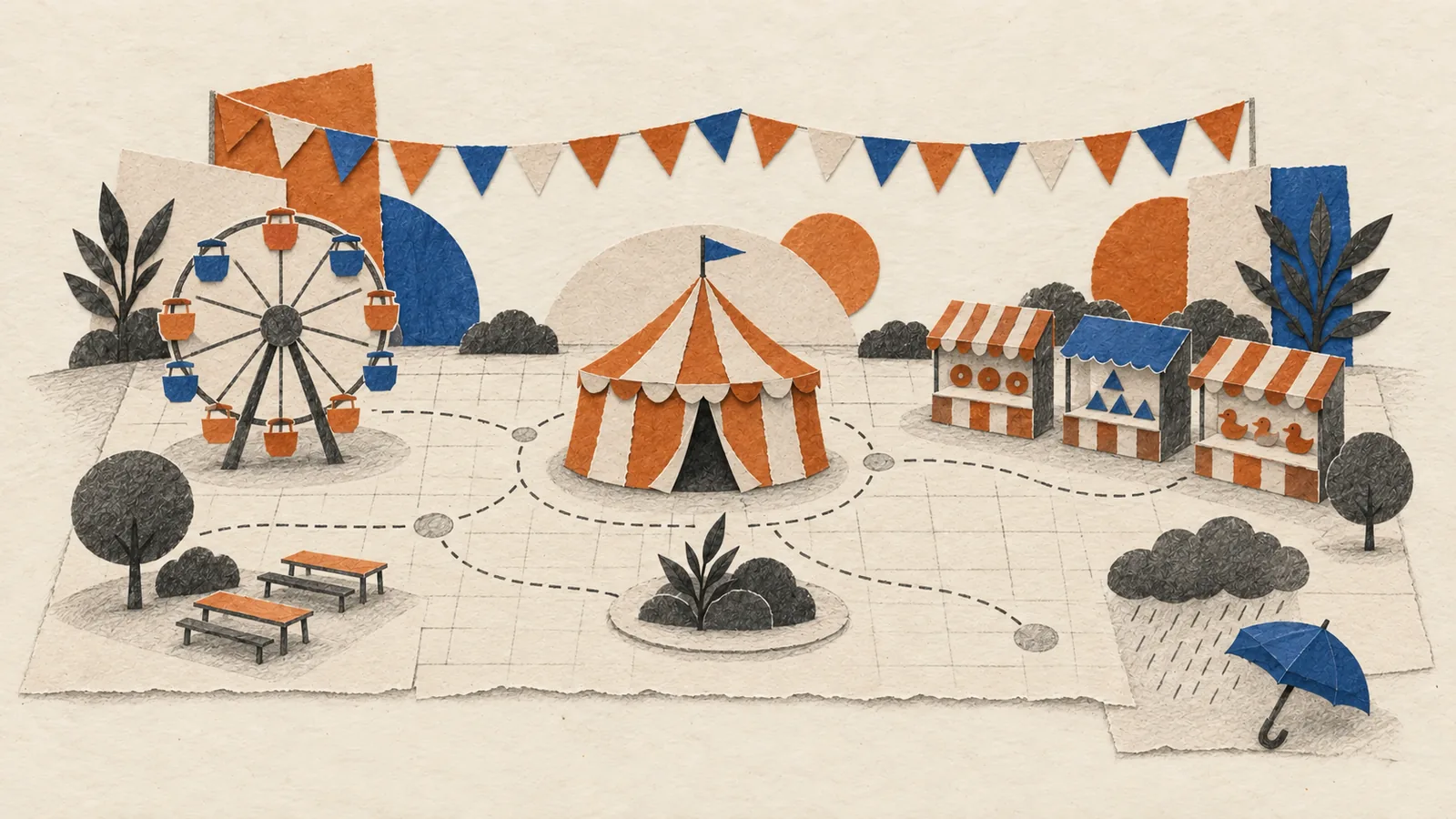
Why it works: giant Jenga, Connect 4, ring toss, bean bag throw, and similar stalls let parents and kids rotate together without a formal team draw.
Best for: open-house style events where families move at their own pace.
Watch out for: avoid building the whole programme around prize redemption only. The point is shared play, not only queueing for tokens. If you are deciding which stall types carry the best throughput, use our carnival games family day Singapore guide.
3. Collaborative Craft or Build Stations
Why it works: parents naturally help younger children, older siblings can customise the result, and the family leaves with a physical keepsake.
Best for: indoor venues, half-day programmes, and quieter audiences.
Watch out for: choose projects that can finish within 15 to 25 minutes. Long projects create half-completed takeaways and traffic jams.
4. Mini Scavenger Hunts or Photo Trails
Why it works: families solve, search, and move together. Younger kids can spot objects, older kids can read clues, and adults can keep the team on pace.
Best for: large parks, resorts, museums, and destination-style family days.
Watch out for: do not turn the route into a full endurance activity unless your audience already expects a more active format.
5. Decorate-and-Share Food Stations
Why it works: cookie decorating, bento assembly, cupcake topping, or simple snack stations are tactile, easy to explain, and naturally cross-generational.
Best for: younger children, calmer programmes, and shorter event windows.
Watch out for: manage hygiene, allergens, and queue reset properly. This is where operational details matter more than the idea itself.
6. Simple STEM Build-and-Test Challenges
Why it works: balloon rockets, paper engineering, marble runs, and bridge builds give parents and children a shared problem to solve without feeling like schoolwork.
Best for: primary-school kids, tweens, and family groups who prefer collaborative over sporty formats.
Watch out for: keep the materials forgiving. If small mistakes ruin the whole activity, frustration rises quickly.
7. Family Stage Challenges
Why it works: short stage games can create memorable moments when the barrier to joining is low and the tone stays playful.
Best for: mid-event energy peaks, prize moments, or short spotlight segments.
Watch out for: use this as a layer, not the whole programme. Too much stage dependence turns most families into spectators.
How to Design for Mixed-Age Participation Without Chaos
Mixed-age participation is not about making every station equally suitable for every age. It is about making sure families can stay together often enough that the event feels shared, while still giving each age band something that fits them.
A practical setup usually looks like this:
- One or two true all-ages stations such as giant games, family relays, or simple craft tables.
- One toddler-safe zone where parents can stay close without blocking the main traffic flow.
- One higher-energy zone for primary-school kids and tweens who need more movement and challenge.
- One calm reset zone with shade, seating, hydration, and stroller-friendly access.
Operationally, the easiest approach is a mix of free-play stations plus a few optional shared moments every 45 to 60 minutes. Families do not need to stay glued together all day. They just need repeated opportunities to reconnect through low-friction activities.
If you are still building the overall event workback, pair this page with our family day planning checklist Singapore guide. If you are pressure-testing supervision, crowd flow, and reunion procedures, also use our family day safety checklist Singapore.
A Simple Programme Structure That Encourages Parent-Child Bonding
The most effective bonding-first family days usually avoid two extremes: fully separated kids programming and over-scripted group programming. A better structure is a hybrid.
- Arrival window: start with easy join-anytime stations such as giant games, simple crafts, or light carnival booths.
- Short shared opener: a welcome, one quick family warm-up, and clear briefing on zones and timing.
- Main roaming block: families choose from several stations, with marshals nudging shared participation instead of pure drop-off behaviour.
- Anchor bonding moment: one family relay, photo challenge, or collaborative showdown that brings attention back to shared play.
- Free-play and food block: let families continue at their own pace without forcing a rigid rotation.
This structure gives HR teams the best of both worlds: enough shape for smooth operations, but enough flexibility for different parenting styles and child energy levels.
How to Brief Vendors So They Support the Outcome
Vendors often pitch based on spectacle, not bonding. Your brief should force the right questions early.
Ask every activity vendor:
- Can a parent and child participate together, or is the format mainly one-person play?
- Can the rules be explained in under 30 seconds?
- What is the realistic throughput per 15 minutes?
- How does the activity adapt for younger children and older siblings?
- How many staff are needed to keep the station safe and moving?
- What is the wet-weather fallback if the event is outdoors?
That is also why it helps to lock the event objective before procurement. If you need an internal document to align budget, scope, and vendor evaluation criteria, use our family day proposal template Singapore before you start collecting quotes.
When Bonding-First Formats Work Better Than Pure Kids Entertainment
A bonding-first family day usually works best when the company wants employee appreciation, culture-building, and genuine cross-family interaction rather than a simple festival atmosphere.
It is especially useful when:
- the child age range is wide and you need shared moments across siblings
- the event duration is only three to five hours, so every station needs to earn its place
- leadership wants the event to feel more personal than transactional
- you need something more inclusive than a pure sports-day format
If the main objective is maximum child entertainment volume, then a broader activity lineup may still be the right answer. But if the goal is stronger family connection, parents need formats that help them participate, not just supervise.
FAQ
How many shared activities do we need in one company family day?
Usually two to four is enough. The goal is not to make every minute a family challenge. It is to place enough shared moments throughout the event that families naturally reconnect instead of drifting into separate tracks for the whole programme.
Do parents need to join every station?
No. In practice, the best results come from a mix of shared stations and child-led stations. Parents should have obvious moments to join, not a full-day obligation to follow every activity.
How do we include toddlers and grandparents at the same event?
Use simple all-ages stations, provide seating and shade near key activity zones, and avoid making the headline format too athletic. Shared craft tables, giant games, and light carnival formats usually work better than high-speed competitive play when the age spread is wide.
Should we separate competitive and non-competitive activities?
Yes. Keep one part of the programme light and casual, and place the more competitive stations in a clearly signposted zone. That way families can choose their pace without the whole event feeling one-note.