
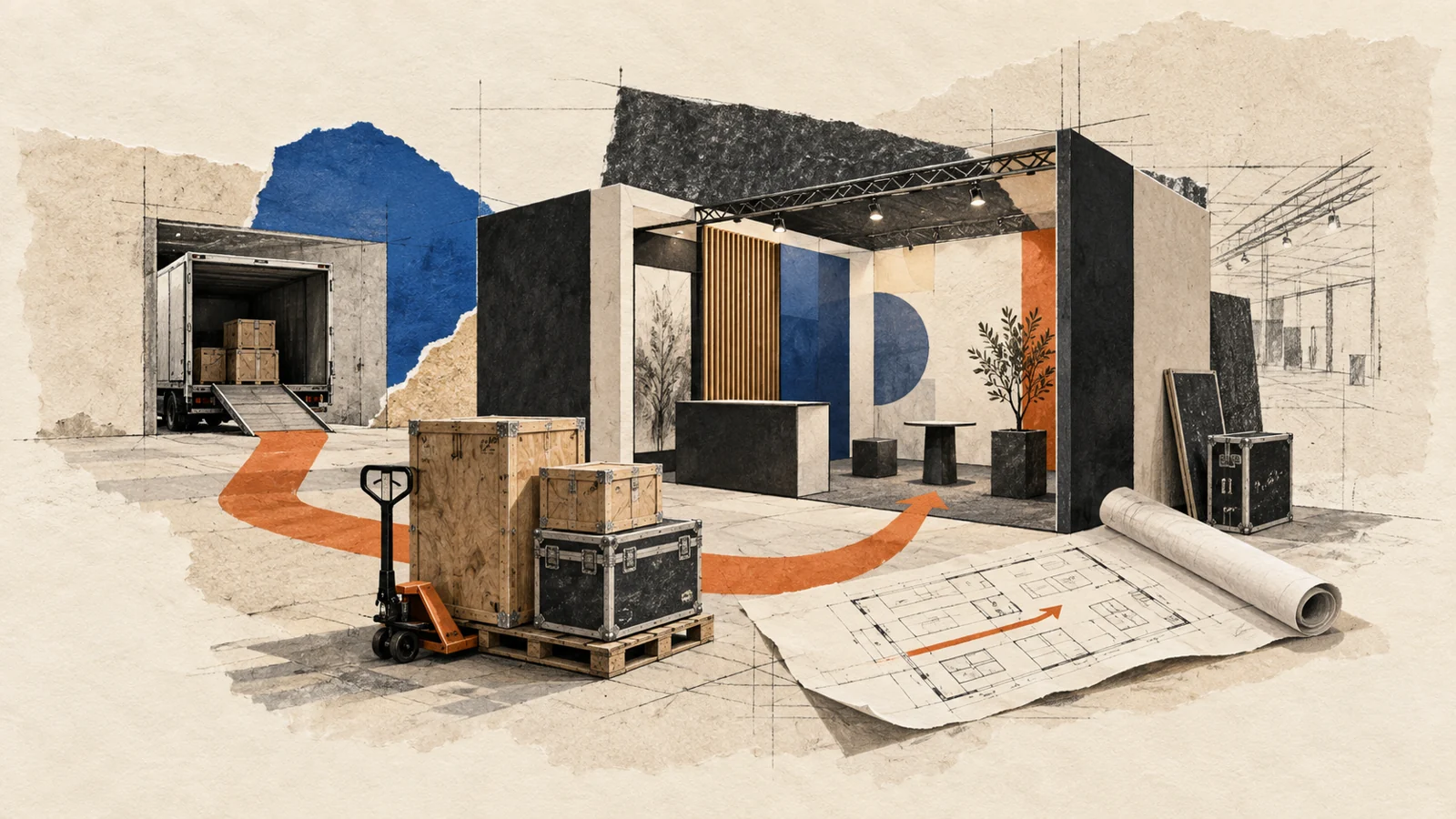
TL;DR: If your MICE event already has an approved format and exhibitor sales are live, this checklist helps your team control the operational details that usually break first on an exhibition floor: exhibitor manuals, booth-build approvals, freight deadlines, move-in windows, loading access, show-day issue handling, and move-out timing. The point is not to restate the event brief. The point is to stop exhibitor logistics from becoming a last-week scramble that spills onto delegates, sponsors, and venue operations.
This page sits after event planning and before hall operations are locked. If your team still needs the broader business-events context, start with our MICE tourism Singapore guide. If programme flow, venue logic, or supplier sequencing are still soft, work through the MICE event planning checklist Singapore first. If you are still confirming who owns sponsor, exhibitor, and operational workstreams before appointment, use the MICE services checklist Singapore. If the brief itself still leaves too many assumptions hanging, tighten the operating scope in the MICE brief template Singapore before you circulate another version.
When to use this MICE exhibitor logistics checklist
Use this page when the event brief is broadly approved, exhibitors are committed or already selling against the floor plan, and the real risk has shifted from commercial planning to operational control.
- The exhibitor manual exists, but deadlines and exceptions are still spread across email threads.
- You have a mix of shell-scheme booths, custom builds, sponsors, and partner activations with different approval paths.
- Freight and delivery rules have been circulated, but nobody has turned them into a working move-in sequence.
- Venue loading bays, dock timing, or hall access windows are tight enough that late arrivals will affect everyone else.
- Show-day issue handling is still vague: who answers exhibitor calls, who clears on-site decisions, and who owns move-out control.
1. Lock one owner for exhibitor logistics control
Exhibitor logistics become chaotic when the organiser, venue, appointed freight partner, stand contractor, and sales owner all assume someone else is driving the same deadline. Name one accountable owner for the control sheet even if multiple suppliers execute parts of it.
- One owner for the latest exhibitor manual and all issued updates.
- One owner for booth-build drawing approvals, risk documents, and contractor exceptions.
- One owner for freight windows, delivery labels, and warehouse or marshaling instructions.
- One owner for move-in and move-out slot allocation.
- One owner for the live show-day exhibitor helpdesk and escalation path.
If your team is still testing whether an organiser will genuinely own those handoffs rather than only forwarding emails, use the MICE agency shortlist Singapore and the MICE services checklist Singapore before award.
2. Turn the exhibitor manual into an operating schedule
An exhibitor manual is not the same thing as exhibitor control. The useful step is translating manual items into dated actions with owners, exceptions, and a version history the floor team can actually work from.
| Manual control point | What to confirm | Why it fails late |
|---|---|---|
| Forms and compliance | Insurance, contractor registration, risk assessments, and any mandatory house rules by stand type. | Incomplete forms usually surface only when access passes are already being issued. |
| Booth drawings and approvals | Submission date, revision cut-off, ceiling-height limits, branding rules, and approval owner. | Custom builds fail when drawings are approved too late for safe fabrication changes. |
| Freight and materials delivery | Official labels, appointed forwarder rules, warehouse window, direct-to-venue restrictions, and receiving contacts. | Boxes reach the venue with no recognised owner, slot, or hall instruction. |
| Utilities and technical orders | Power load, internet, rigging, AV, water, cleaning, and extra furniture deadlines. | Exhibitors assume late orders are small requests when they actually affect hall operations. |
| Access and timing | Move-in passes, loading-bay rules, build hours, live-show access, and move-out release conditions. | Teams arrive with people and materials but no approved route into the hall. |
3. Separate shell-scheme exhibitors from custom-build exhibitors early
Shell-scheme exhibitors and custom-build exhibitors create very different operational risk. Treating them as one population usually leads to the wrong reminders, the wrong slot durations, and the wrong escalation path.
- Keep one list for shell-scheme booths with graphics, furniture, and utility-order deadlines.
- Keep a separate list for custom builds with drawings, structural approvals, contractor passes, and dismantle planning.
- Flag sponsor activations, double-deck concepts, hanging items, or heavier structures as separate exception cases.
- Mark which exhibitors have appointed contractors and which rely on venue or official-stand packages.
If those distinctions are still unclear at briefing stage, tighten them in the MICE brief template Singapore before your suppliers start pricing and sequencing against different assumptions.
4. Lock freight rules before the final week
Freight is where exhibitor promises collide with venue reality. The practical job is to confirm what can arrive, where it can arrive, who receives it, and what happens when delivery timing changes.
- State whether goods go through an appointed freight forwarder, a warehouse holding window, or direct-to-venue delivery.
- Separate small courier cartons from pallets, crates, fragile items, perishables, and heavy equipment.
- Record the hall, stand number, exhibitor contact, on-site contact, and delivery date on the same master sheet.
- Confirm whether empties storage, return labels, or post-show re-dispatch are in scope.
- Obtain brokerage, import, and permit guidance from the appointed freight or venue source, and make sure your internal owner knows which exhibitors need that support.
If your event team is also coordinating overseas delegate arrivals, do not let baggage and exhibitor materials collapse into the same workstream by accident. Use the MICE delegate travel checklist Singapore for people movement and keep exhibitor freight on its own control track.
5. Build the loading-bay and move-in sequence before exhibitors improvise one
Loading access is not just a venue note. It is a sequence plan. Once too many exhibitors arrive in the same hour, even a technically valid manual stops helping because the queue itself becomes the problem.
- Assign move-in windows by stand type, hall zone, and build complexity rather than first-come-first-served requests.
- Separate shell-scheme dressing, custom-build installation, late sponsor top-up, and replenishment deliveries.
- Record vehicle limits, trolley rules, lift constraints, and marshaling instructions in the same document as the slot plan.
- Plan who can authorise exceptions when a truck misses its window, a build overruns, or a contractor arrives without complete documents.
6. Make booth-build approvals visible to the people running show day
Build approvals are often processed by sales, project, or venue teams days before the operations crew actually opens the hall. That separation is where unapproved changes survive into live show conditions.
- Keep the latest approved stand drawing, power order, and signage note linked to each exhibitor record.
- Flag stands with late changes, extra power draw, unusual rigging, or unresolved safety comments.
- Make sure the on-site operations lead knows which builds are still conditional, not just which ones were submitted.
- Track which issues can still be fixed during build hours and which must be escalated before doors open.
7. Write the show-day exhibitor support path before the hall opens
Exhibitors do not care which team owns the problem internally. They care whether someone answers when power trips, a booth graphic is missing, cartons do not arrive, or a replenishment run is rejected at the dock.
- Name the exhibitor helpdesk number or WhatsApp path that is actually monitored live.
- List escalation owners for venue operations, utilities, stand build, freight, security, and organiser approval.
- Separate what can be solved by floor staff from what requires organiser, venue, or safety sign-off.
- Keep one live issues log so repeated problems are visible across the hall rather than solved in isolated chats.
If your wider programme still needs the room-control, delegate-flow, and issue-escalation layer aligned around the same owner group, go back to the MICE event planning checklist Singapore before show week.
8. Treat move-out and teardown as a separate operation
Move-out fails for the same reason move-in fails: everyone assumes the timing is obvious. It is not. Exhibitors want speed, venues want control, and freight teams want accurate release timing.
- Confirm the official teardown start time, empty-carton return logic, and vehicle release rules.
- Separate pack-down for shell-scheme exhibitors from dismantle for custom-build contractors.
- Note what cannot leave the hall until organiser or venue release is given.
- Keep return-freight labels, collection windows, and signed handover notes visible before doors close.
9. Final 72-hour lock check before exhibitor move-in
Three days out, stop asking whether the plan exists and confirm whether the control files are final enough to operate from.
- Latest exhibitor manual or update notice issued with no unresolved deadline ambiguity.
- Move-in slots confirmed by hall zone, build type, and approved exception cases.
- Freight and delivery sheet shows exhibitor, stand, contact, receiving path, and timing status.
- Booth-build approvals, power orders, and safety notes are visible to the live operations owner.
- Show-day exhibitor helpdesk and escalation contacts are tested and circulated.
- Move-out release logic is confirmed before the first exhibitor asks for it on site.
If your show is already locked into Changi Exhibition Centre, use our Changi Exhibition Centre logistics checklist Singapore to turn the general move-in plan into venue-specific route planning, site recce timing, freight-door checks, and airport-side setup sequencing.
Use this checklist with the rest of the MICE planning stack
This exhibitor logistics checklist is not a substitute for broader MICE planning. It is the operations-control layer that sits after scope and before the hall goes live.
- Use the MICE tourism Singapore guide for broad format and market context.
- Use the MICE event planning checklist Singapore for venue flow, timeline, and operational readiness.
- Use the MICE services checklist Singapore to confirm whether your organiser actually owns exhibitor and sponsor handoffs.
- Use the MICE brief template Singapore to brief venues, organisers, and specialist suppliers with fewer assumptions.
- Use the MICE delegate travel checklist Singapore when people movement and materials movement need separate control files.
If those pages are already in place, this exhibitor logistics checklist becomes the working filter that helps your team control manuals, freight, booth build, loading access, and show-day coordination before problems become visible on the hall floor.